Last updated on November 14th, 2026 at 08:35 pm
Visit Cairo for the pyramids, the world’s greatest collections of ancient Egyptian treasures and a thousand years of Islamic architecture – all in one huge, lively city. Three days is a good minimum, October to April is the most comfortable time, and Uber plus a good guide make it far easier than it first looks.
Visit Cairo for the pyramids, the world’s greatest collections of ancient Egyptian treasures and a thousand years of Islamic architecture – all in one huge, lively city. Three days is a good minimum, October to April is the most comfortable time, and Uber plus a good guide make it far easier than it first looks.
Because nowhere else puts the pyramids, a thousand years of Islamic architecture and a huge, lively modern city in one place. Cairo is also the gateway to the rest of Egypt – most trips start and end here – so even two or three days in the city will make the rest of your journey make more sense.
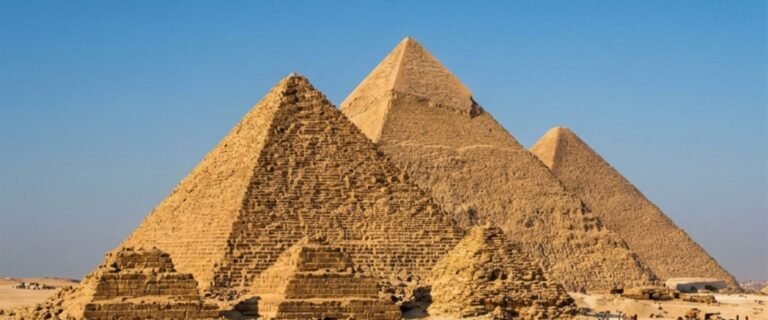
The Giza pyramids and the Sphinx are on the city’s edge, and the Grand Egyptian Museum next to them holds Tutankhamun’s complete treasures. Add the royal mummies at the NMEC and the old Egyptian Museum in Tahrir, and you have the richest ancient collections anywhere.
Cairo is loud, crowded and full of conversation. Sitting at an ahwa (street café) with tea, watching backgammon games and the traffic go by, is as much a Cairo experience as any monument – and a few words of Arabic go a long way. Start with our guide to Egyptian Arabic greetings.
Try koshary (rice, lentils, pasta and spicy tomato sauce), ful and ta’meya for breakfast, grilled kofta, and sweets like basbousa and konafa. Street food is very cheap; sit-down restaurants are still good value by European standards. See where to eat in Cairo.
From backpacker hostels in Downtown to international hotels on the Nile and in the pyramids area, Cairo has accommodation for every budget. Our guide to where to stay in Cairo compares the areas.
Cairo stays up late. Families walk the Nile corniche after dark, cafés are busiest around midnight, and evening felucca rides and Nile dinner cruises are popular. Bars are mostly found in hotels and in Zamalek and Downtown.
Khan el-Khalili is the classic bazaar for lanterns, spices, silver and souvenirs – bargaining is expected. For everyday shopping, Egyptians go to neighbourhood markets and modern malls.
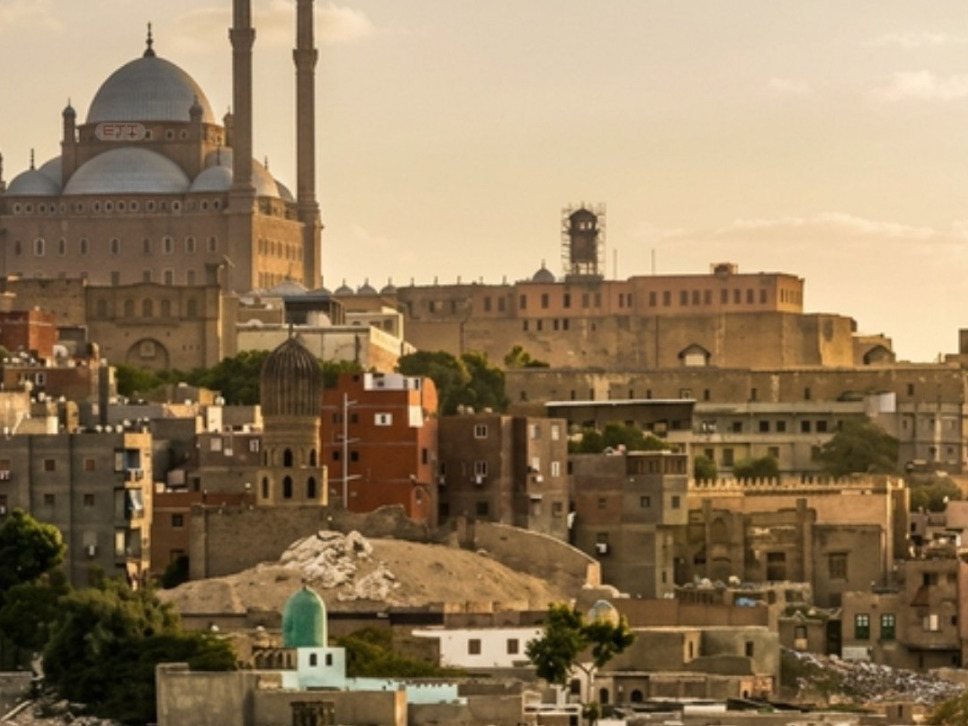
Cairo has been a capital for over a thousand years, and you see it everywhere: Fatimid gates, Mamluk mosques on Al-Muizz Street, the Ottoman-style Mosque of Muhammad Ali on the Citadel, and some of the oldest churches in Egypt.
Cairo has Egypt’s main international airport and connects by flight, train or road to Luxor, Aswan, the Red Sea and the Western Desert, so it’s the natural start and end of most trips.
The area has been important since ancient Memphis, the first capital of united Egypt, just south of today’s city. Cairo itself was founded by the Fatimids in 969 as their new capital, next to the older settlement of Fustat. It grew under the Ayyubids, who built the Citadel, and the Mamluks, who filled it with mosques and madrasas, and became the modern capital of Egypt in the 19th and 20th centuries.
Cairo lies on the Nile in northern Egypt, where the river valley opens into the Delta. Giza and the pyramids are on the west bank; most of the historic city is on the east bank.
Yes. It can be overwhelming – traffic, noise and crowds – but the pyramids, the museums and Islamic Cairo are among the world’s great sights. Plan your days around one area at a time and use Uber or a guide, and Cairo becomes much easier.
The layers of history: you can stand at a 4,500-year-old pyramid in the morning, walk through a medieval bazaar in the afternoon and eat on a modern rooftop by the Nile at night.
History lovers, photographers, food travellers and anyone curious about Arab city life. It is less suited to travellers who want a quiet, slow holiday – combine it with the Red Sea or a Nile cruise for balance.
October to April, when days are warm and sunny and evenings are cool. Summer (June–August) is very hot, so start sightseeing early and rest at midday. See the best time to visit Egypt.
Uber is the easiest way to get around; the metro is cheap and fast for Downtown, Old Cairo and the Nile neighbourhoods. Street taxis rarely use the meter with foreigners, so agree the price first.
The drive takes about 30–60 minutes to Downtown, longer at rush hour. Uber works from the airport, or book a fixed-price private transfer to Downtown from $25 with a driver waiting at arrivals.
Within one area, yes – Downtown, Islamic Cairo, Coptic Cairo and Zamalek are all walkable. Between areas, distances are big and crossing busy roads is hard, so take an Uber or the metro.
Three days covers the pyramids and GEM, Islamic Cairo and the Citadel, and Coptic Cairo with the NMEC. Add a fourth day for Saqqara and Dahshur or a day trip to Alexandria.
Cairo is generally safe for tourists, with low violent crime. The usual problems are scams and pushy sellers around the big sights, and traffic. Read our tips on staying safe in Egypt.
See the pyramids and the Sphinx, spend half a day at the GEM, walk Islamic Cairo from the Citadel to Khan el-Khalili, visit the churches of Coptic Cairo, sail a felucca at sunset and watch the city from the Cairo Tower.
Look for busy local restaurants – koshary shops, ful and ta’meya stands, grill houses – as well as cafés in Zamalek and Downtown. Our Cairo food guide has more ideas.
Mix guided days for the big sights with free time in the neighbourhoods. A guide explains the history and handles tickets and transport; evenings are best spent walking on your own.
Children usually love the pyramids and a camel ride, the Tutankhamun galleries at the GEM, a felucca on the Nile and the Cairo Tower. Keep museum visits short and plan midday breaks.
Saqqara and Dahshur for older pyramids, Alexandria on the Mediterranean, Fayoum and Wadi El Hitan, or even a long day trip to Luxor by plane.
Not everywhere, but a licensed guide makes a big difference at the pyramids, the museums and Islamic Cairo – they explain what you’re seeing and keep touts away.
Pyramids and the Sphinx in the early morning, lunch and the Grand Egyptian Museum, then an evening walk in Khan el-Khalili with tea at a café. It’s busy, but it covers the essentials.
| Days needed | 3 to 4 for the main sights |
| Top sights | Giza pyramids, Grand Egyptian Museum, Islamic Cairo, Coptic Cairo, Khan el-Khalili |
| Best months | October to April |
| Getting around | Ride-hailing apps, metro, taxis |
| Where to stay | See our where to stay in Cairo guide |
Cairo rewards visitors who plan a little: one area at a time, early starts, and a guide for the big sights. Give it at least three days before heading south to Luxor and Aswan or east to the Red Sea.
Book this experience: Giza Pyramids and Egyptian Museum day tour – hotel pickup and an Egyptologist guide, from $30.
Reasons why you should visit Cairo
Pyramids of Giza | Ibn Tulun Mosque | Mosque Madrassa of Sultan Hassan | Prince Mohamed Ali Palace (Al Manial Palace) | The National Museum of Egyptian Civilization | Mosque of Mohamed Ali | Nile River in Egypt | Sharia Al Muizz Li Din Allah | Museum of Islamic Art in Cairo | The Egyptian Museum in Cairo | Khan Al Khalili | Al Azhar Mosque | Grand Egyptian Museum | Cairo Tower | Al azhar park | Downtown | Zamalek Island
All rights reserved © Egypttoursinfo.com Republishing this article and/or any of its contents (text, photography, etc.), in whole or in part, is strictly prohibited.
All rights reserved © Egypttoursinfo.com Republishing this article and/or any of its contents (text, photography, etc.), in whole or in part, is strictly prohibited.
Guided trips with bottled water, transfers and hotels arranged for you.