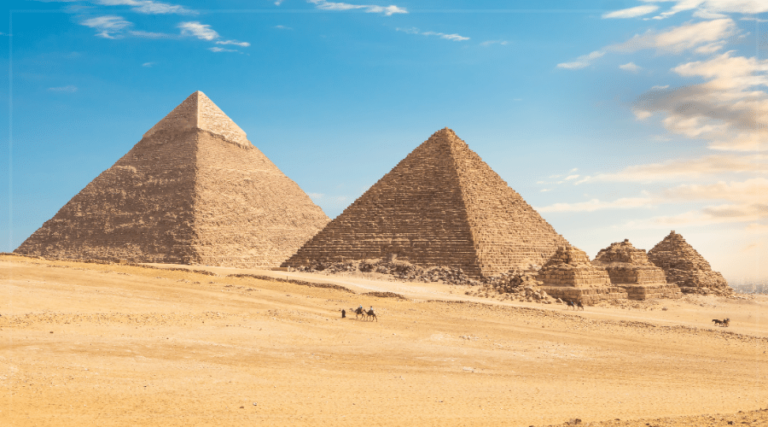
Phrasebooks teach na’am for “yes”. You’ll hear it in Egypt – from a hotel manager, a police officer, a TV presenter – but on the street the everyday yes is aiwa. Get that one word right and you already sound less like a textbook.
This lesson takes the short words that hold conversations together – yes, no, okay, enough, anyway – one at a time: what each means, how to say it, when to use it and how it sounds in a real situation in Cairo.
| Say this | Meaning | When to use it |
|---|---|---|
| Aiwa | Yes | Everyday yes, with anyone |
| La’ | No | Any time – add shokran to soften it |
| Mashy | Okay / fine | Agreeing to a plan or a price |
| Khalas | Enough / done | Ending a deal, a meal or an argument |
| Akeed | Definitely | A strong yes |
The silent no: Many Egyptians say no without words: a quick lift of the chin and eyebrows, often with a small “tsk” click of the tongue. If you ask a driver “Giza?” and get that look, the answer is no.
Listen: how a Cairo local says it
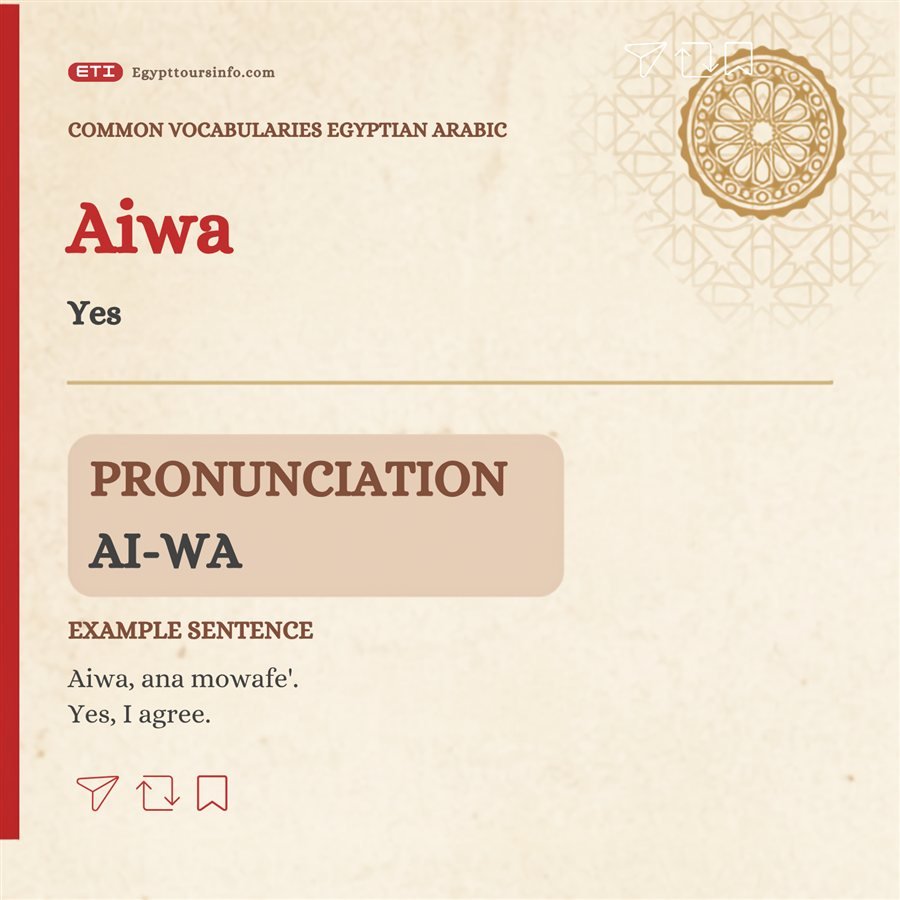
Aiwa (AI-wa) means “yes”. It’s the yes you’ll hear in shops, taxis and cafés, and the one Egyptians use with each other all day.
How to use it: Use it with anyone in everyday situations. Add shokran to accept something politely: aiwa, shokran – yes, thanks.
In real life: The waiter asks Shay? (tea?) – you answer Aiwa, law sama7t – yes, please.
Listen: how a Cairo local says it
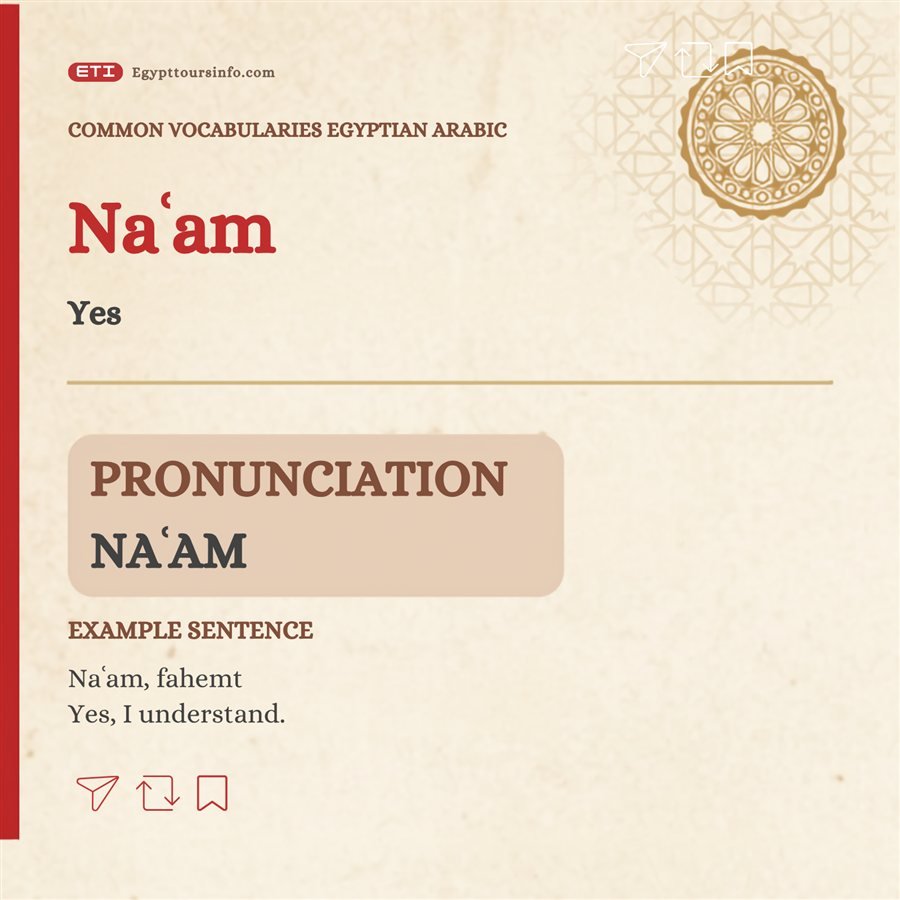
Na’am (NA-‘am) also means “yes”, but it’s more formal – the word of officials, news presenters and hotel managers.
How to use it: Use it in formal settings, and when someone calls your name: the natural reply is na’am? – “yes?”. It also means “pardon?” if you didn’t hear.
In real life: At passport control the officer says your name – you answer Na’am.
Listen: how a Cairo local says it
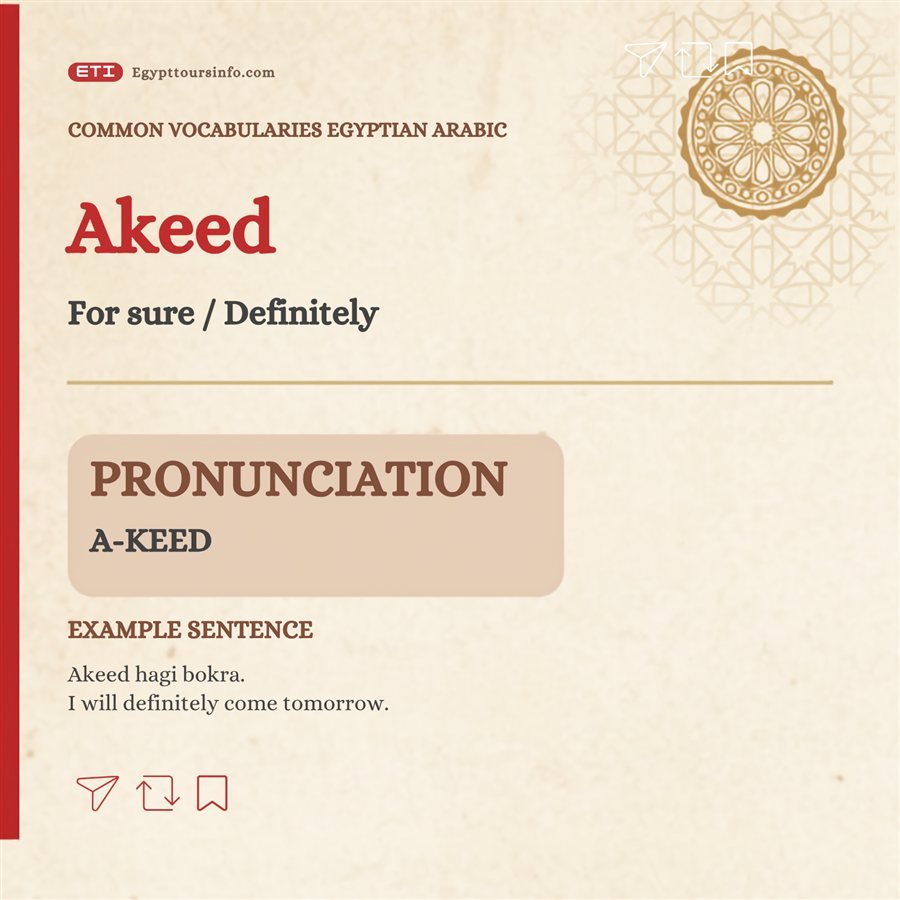
Akeed (a-KEED) means “for sure, definitely” – a strong, happy yes.
How to use it: Use it to confirm plans or show you’re keen.
In real life: Your guide asks if you want to see the sunset at the temple – Akeed! And to confirm a plan: Akeed hagi bokra – I’ll definitely come tomorrow.
Listen: how a Cairo local says it
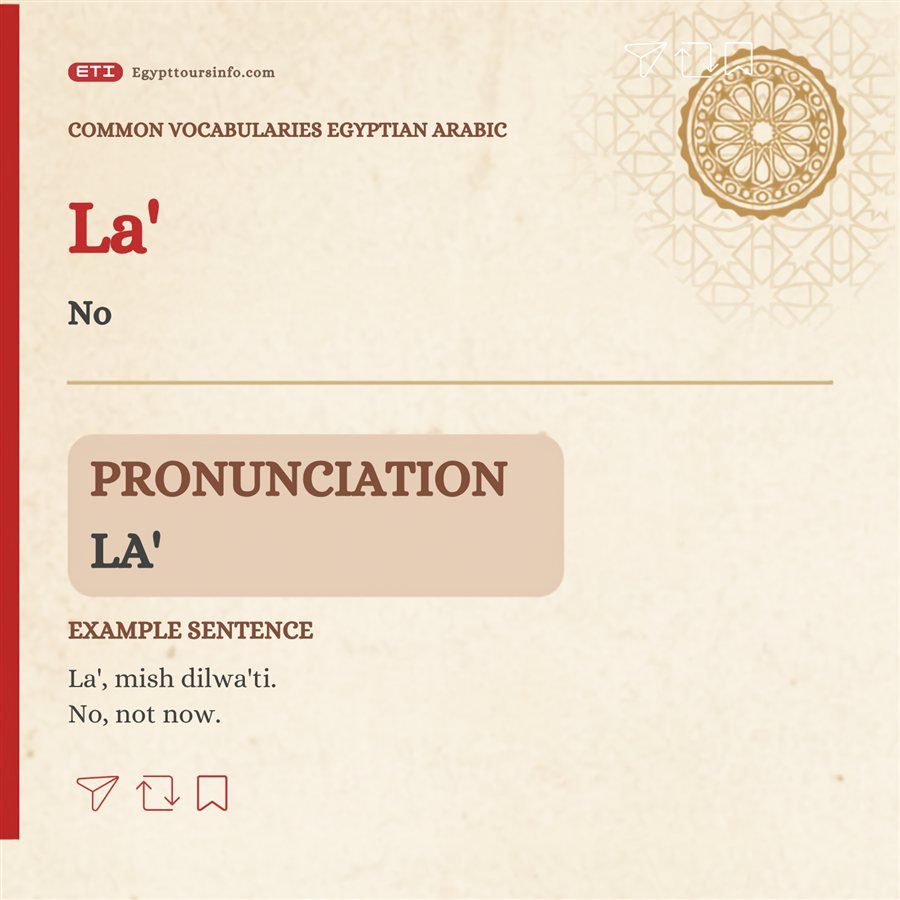
La’ (LA’) means “no”. The apostrophe is a short catch in the throat, but la without it is understood too.
How to use it: Add shokran to make it polite and final: la’, shokran. It works on street sellers, taxi touts and offers of “help”.
In real life: A seller in Khan El Khalili holds up a scarf – La’, shokran, with a smile, and keep walking.
Listen: how a Cairo local says it
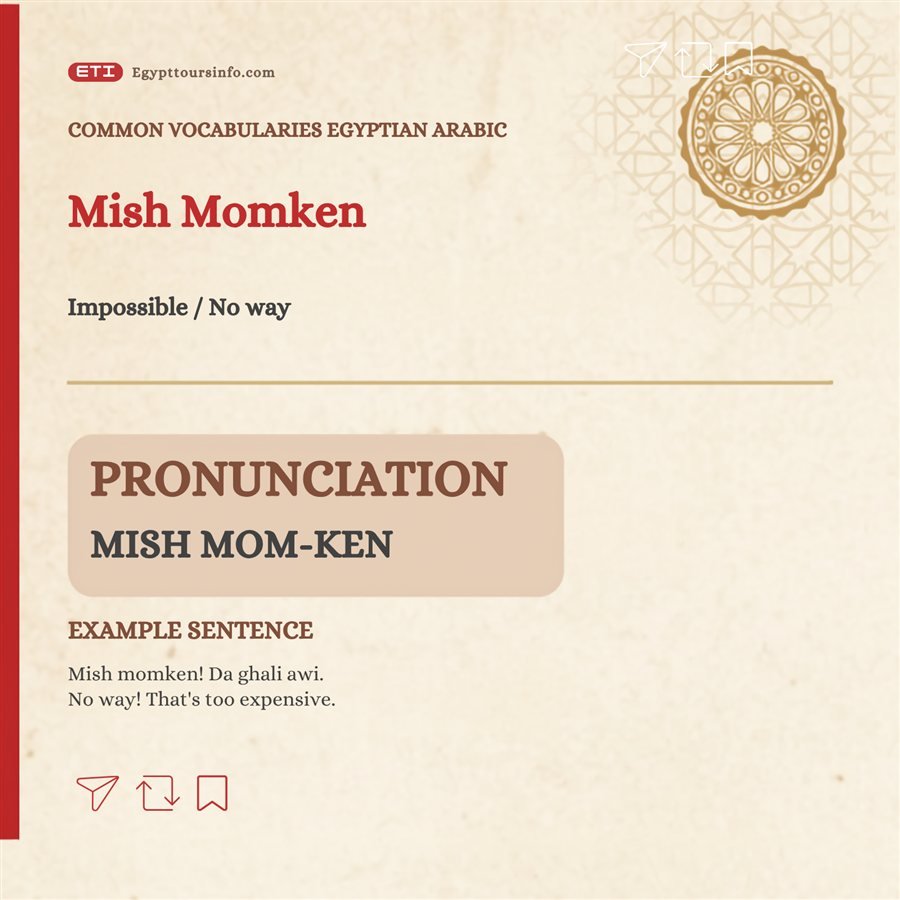
Mish momken (mish MOM-ken) means “impossible, no way”.
How to use it: Use it when a price is too high or a request can’t be done. Said with a smile, it’s part of haggling, not an insult.
In real life: Mish momken! Da ghali awi – no way, that’s too expensive.
Listen: how a Cairo local says it
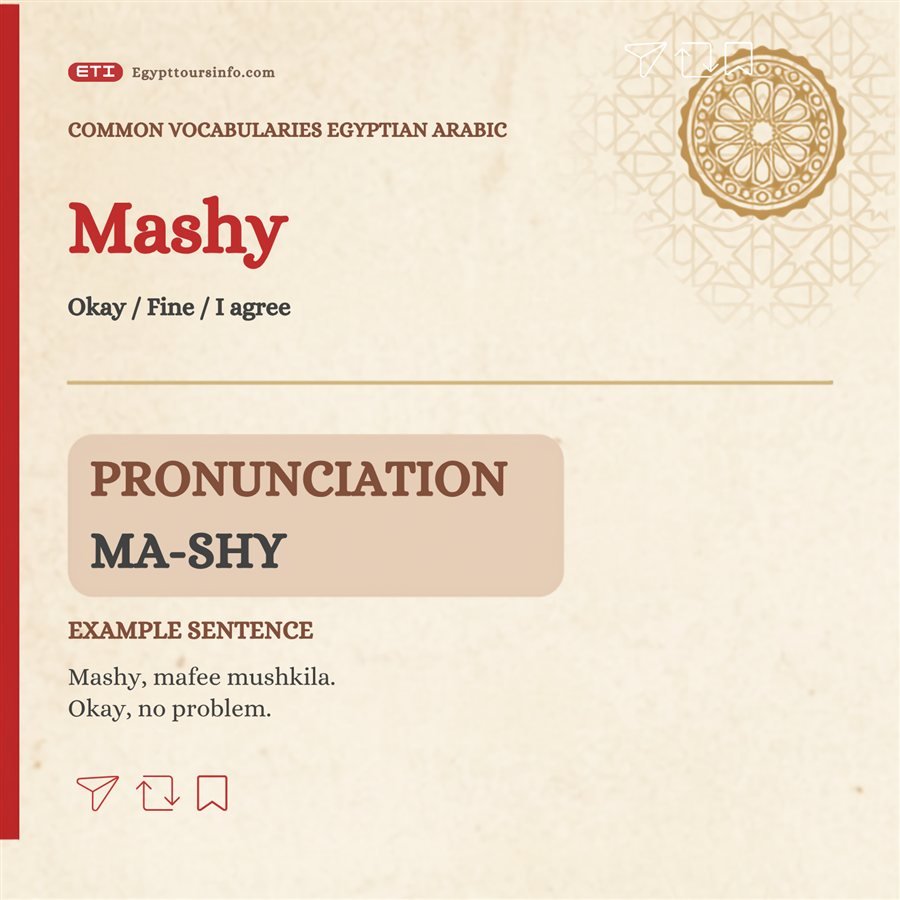
Mashy (MA-shy) means “okay, fine, deal” – probably the word you’ll hear most from drivers and shopkeepers.
How to use it: Use it to agree to a plan, a time or a price.
In real life: The driver says 200 geneih – you agree: Mashy, yalla – okay, let’s go.
Listen: how a Cairo local says it
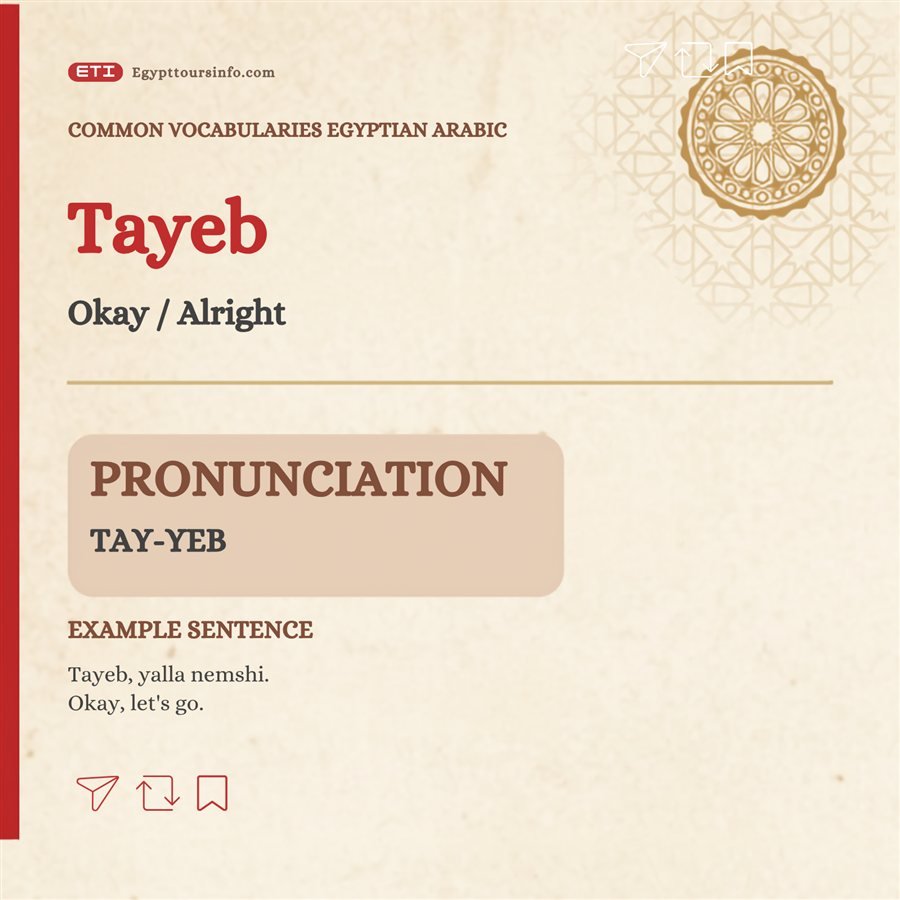
Tayeb (TAY-yeb) means “alright, okay”, often used to move a conversation on – “alright, so…”.
How to use it: Use it to wrap up one topic and start the next, or to accept something calmly.
In real life: Tayeb, yalla nemshi – alright, let’s go.
Listen: how a Cairo local says it
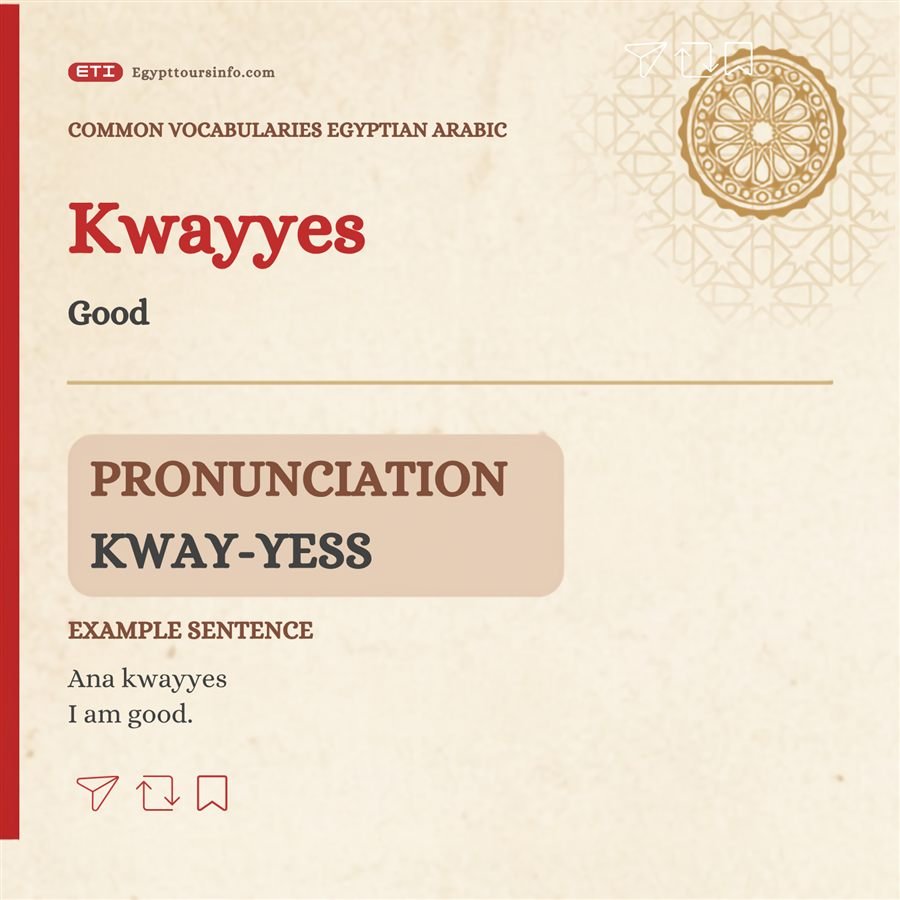
Kwayyes (KWAY-yes) means “good, fine”. A woman describing herself says kwayyesa.
How to use it: Use it for food, places, plans – and to answer “how are you?”.
In real life: After lunch: El akl hena kwayyes awi – the food here is very good.
Listen: how a Cairo local says it
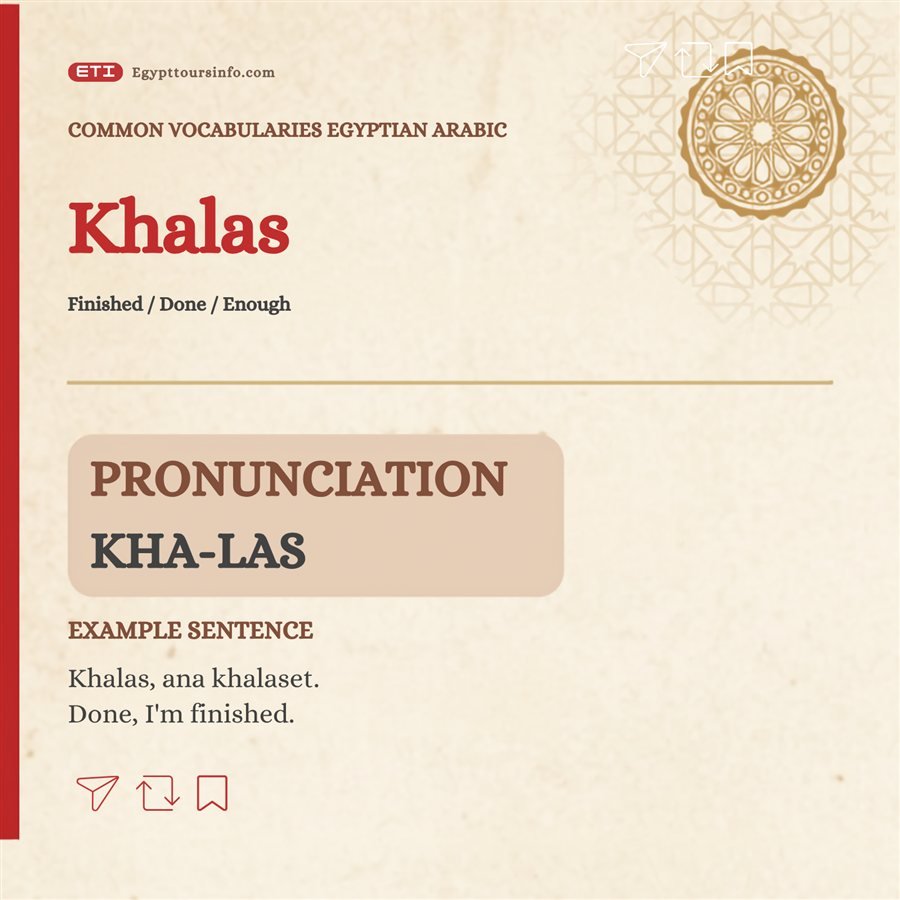
Khalas (kha-LAS) means “finished, done, enough” – one of the most useful words in Egypt.
How to use it: Use it to close a deal, stop more food arriving, or end a discussion.
In real life: Your host keeps refilling your plate – a hand on your chest and Khalas, el hamdu lillah – enough, thank God – is the polite way to say you’re full.
Listen: how a Cairo local says it
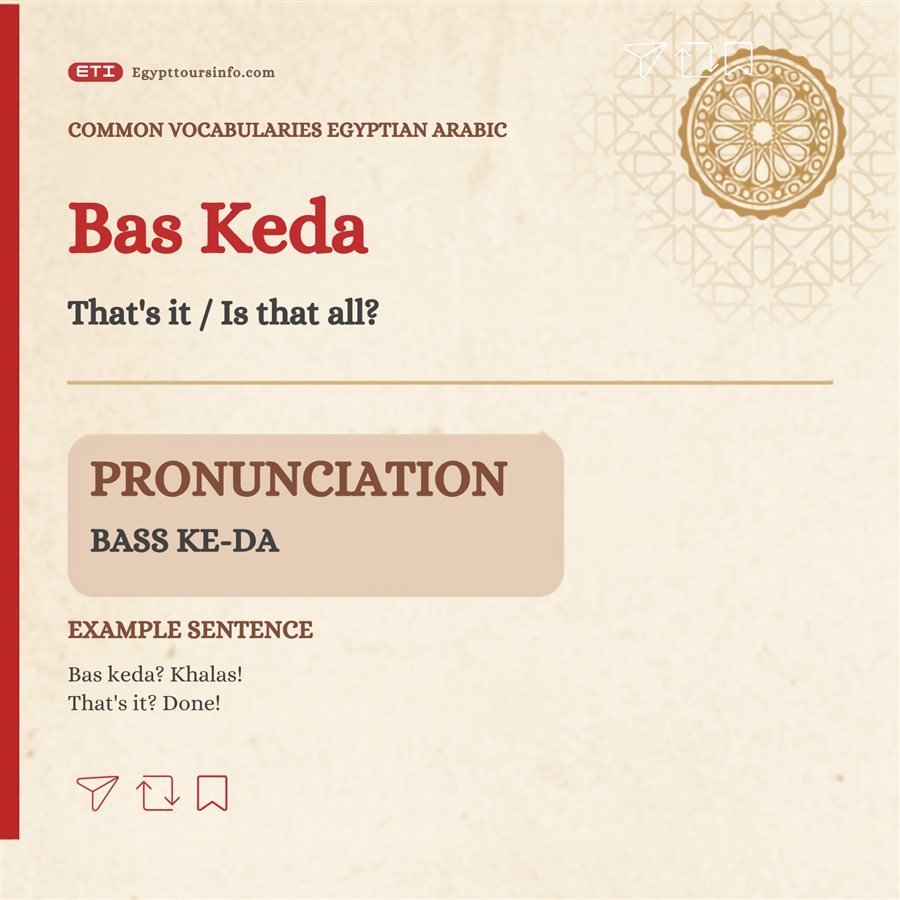
Bas keda (BASS KE-da) means “that’s it” – or, as a question, “is that all?”.
How to use it: Use it when you’ve finished ordering or when someone asks if you need anything else.
In real life: At a juice stand: Wa7ed mango, bas keda – one mango, that’s it.
Listen: how a Cairo local says it
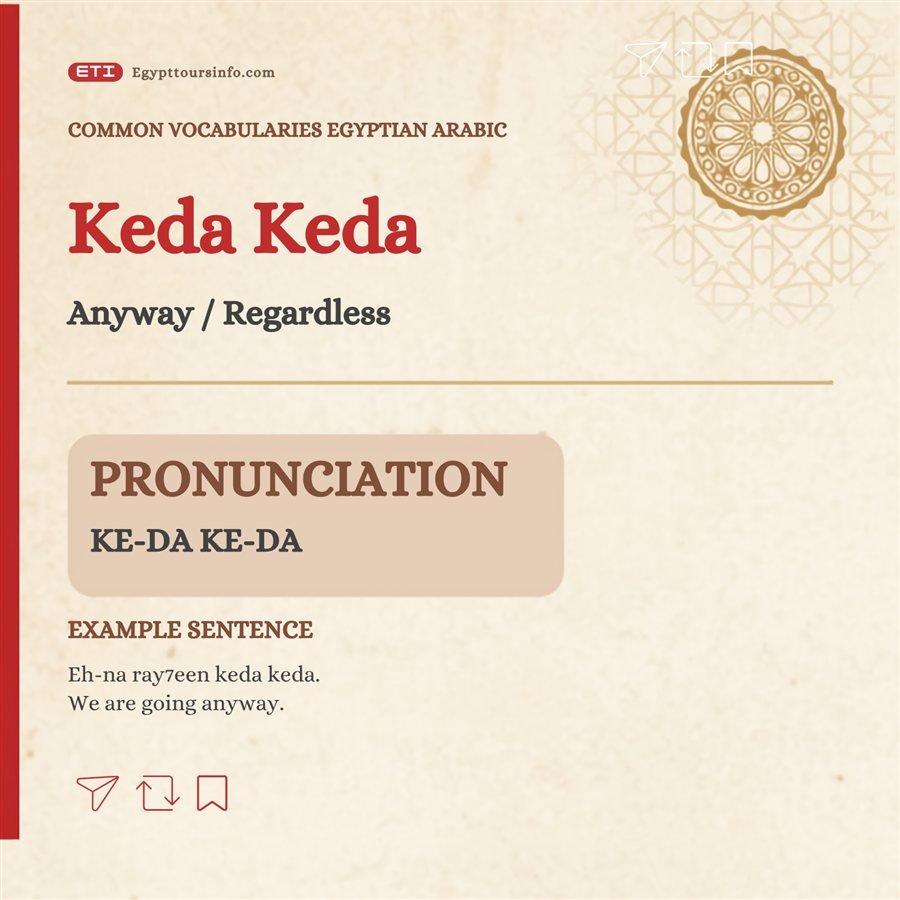
Keda keda (KE-da KE-da) means “anyway, regardless”.
How to use it: Use it when plans won’t change whatever happens.
In real life: It’s raining in Alexandria – Ehna ray7een keda keda – we’re going anyway.
Listen: how a Cairo local says it
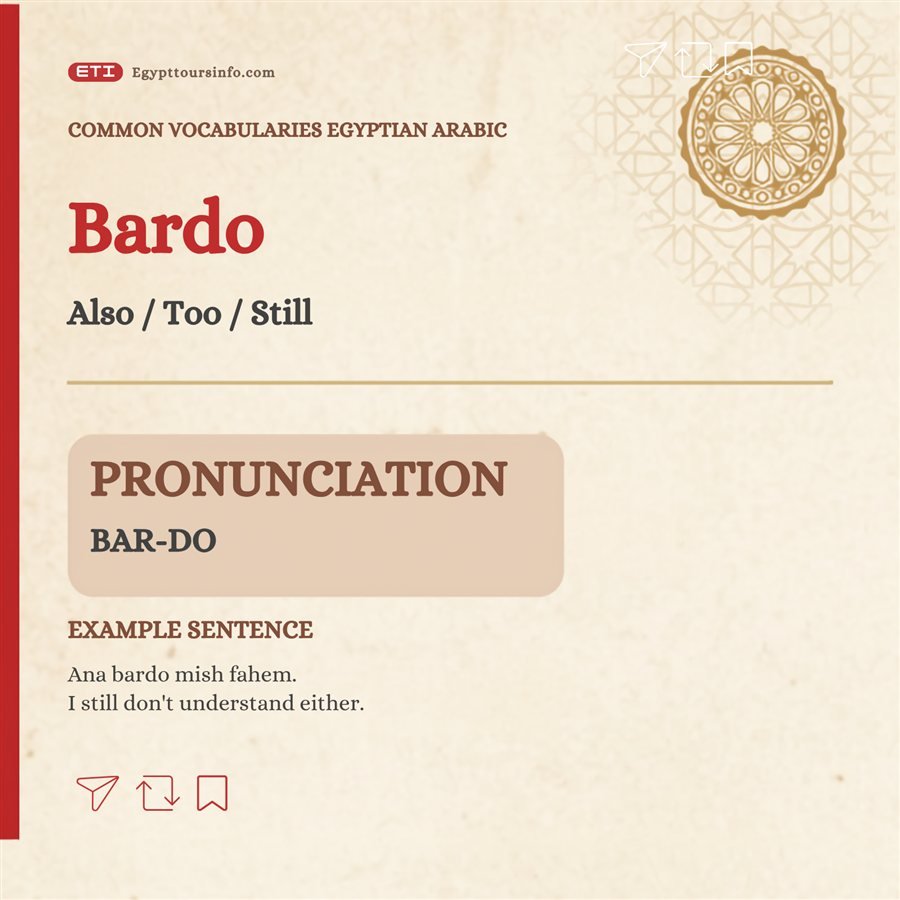
Bardo (BAR-do) means “also, too” or “still”.
How to use it: Use it to add yourself to something, or to say something hasn’t changed.
In real life: Your friend orders koshari – Ana bardo – me too. Or: Ana bardo mish fahem – I still don’t understand.
Momken (MOM-ken) means “maybe, possibly” – and “can I…?”: Momken el 7esab? – can I have the bill?
In sha’a Allah (in-SHA-al-lah) means “God willing”. Egyptians say it about anything in the future. If a time or a plan follows, it’s usually a yes; if the subject changes, treat it as a maybe.
Ya’ni (YA’-ni) means “kind of, I mean”. Said with a shrug, it’s “so-so”.
In a taxi
You: Law sama7t, el Haram? (excuse me, to the Pyramids?)
Driver: Aiwa, mashy.
You: Bekam? (how much?) … Mish momken! Tayeb, khalas.
At a café
Waiter: Shay? (tea?)
You: Aiwa, shokran. … later … Khalas, shokran – el 7esab, momken?
Making plans
Guide: Bokra el sa3a tamanya? (tomorrow at eight?)
You: Akeed. In sha’a Allah.
Start with greetings in lesson 1 and polite words in lesson 2 – together with this lesson they cover most of a day out in Cairo.
Screenshot this table and keep it on your phone.
| Egyptian Arabic | Pronunciation | Meaning |
|---|---|---|
| Aiwa | AI-wa | Yes |
| Na’am | NA-‘am | Yes (formal) / pardon? |
| Akeed | a-KEED | Definitely |
| La’ | LA’ | No |
| Mish momken | mish MOM-ken | No way / impossible |
| Mashy | MA-shy | Okay / fine |
| Tayeb | TAY-yeb | Alright |
| Kwayyes | KWAY-yes | Good |
| Khalas | kha-LAS | Enough / done |
| Bas keda | BASS KE-da | That’s it |
| Keda keda | KE-da KE-da | Anyway |
| Bardo | BAR-do | Also / still |
| Momken | MOM-ken | Maybe / can I…? |
| In sha’a Allah | in-SHA-al-lah | God willing |
How do you say yes in Egyptian Arabic?
Aiwa in everyday speech; na’am is the formal version.
How do you say no in Egyptian Arabic?
La’. Add shokran – la’, shokran – to turn down a seller politely.
What does “khalas” mean?
“Enough, finished, done” – for a meal, a deal or a discussion.
Does “in sha’a Allah” mean yes?
Sometimes. It means “God willing” and is said about anything in the future – listen for a time or a plan after it.
What’s the difference between mashy and tayeb?
Both mean okay. Mashy is agreeing; tayeb often moves the conversation on – “alright, so…”.
You’ll use every word in this lesson on a single day in Cairo – agreeing a plan, turning down a seller, saying khalas after lunch. A day with a local guide is the easiest place to start; most guides are happy to correct your aiwa.
Practise with a local: our Giza Pyramids and Egyptian Museum day tour from $50, or an evening on our Nile dinner cruise from $35 (prices October 2026).
All rights reserved © Egypttoursinfo.com Republishing this article and/or any of its contents (text, photography, etc.), in whole or in part, is strictly prohibited.
Hand-picked day tours and trips from Cairo, with hotel pickup and friendly local guides.