
Last updated on November 11th, 2026 at 10:44 pm

Siwa Oasis is a remote palm-filled oasis in Egypt’s Western Desert, close to the Libyan border, famous for the Oracle Temple of Amun that Alexander the Great visited, the mud-brick ruins of Shali, warm springs, salt lakes and the dunes of the Great Sand Sea. Its people are Amazigh (Berber) and speak their own language, Siwi, which gives Siwa a culture unlike anywhere else in Egypt.
| Getting there | About 9 to 10 hours by road from Cairo, via Alexandria or Marsa Matrouh |
|---|---|
| Best time | October to April |
| How long | 3 to 4 nights |
| Getting around | Bike, tuk-tuk or donkey cart in town, 4×4 for the desert |
| Good to know | Conservative town, no alcohol, cash is useful |
Siwa is a depression in the desert about 300 km south-west of Marsa Matrouh, covered with date palms and olive groves and fed by hundreds of springs. Around 30,000 people live there, most of them in Siwa town and a few villages. For centuries it was cut off from the Nile Valley, and it was joined to Egypt only in the 19th century, which is why its language, crafts and traditions are so different.

Siwa was famous in the ancient world for the Oracle of Amun. In 331 BC Alexander the Great crossed the desert to consult it, and according to ancient writers the oracle greeted him as the son of the god. The oasis later came under Greek and Roman rule; the painted tombs in the Mountain of the Dead date from those periods.
In the Middle Ages the Siwans built the fortified town of Shali from kershef, a mix of salt rock and mud. After heavy rains in 1926 damaged it badly, most families moved into new houses below, and the old town slowly fell into the picturesque ruin you see today.

Siwa’s people are Amazigh, often called Berbers, and many speak Siwi at home, a language related to those of North Africa rather than to Arabic. Family life is private, and women in the town usually wear a full blue or grey wrap when they go out. Respect that by asking before photographing anyone, and do not photograph women at all.
The oasis lives from dates and olives, and you will see both everywhere. If you are here at the October full moon, the Siyaha festival at Gebel Dakrur brings families together for three days of shared meals and prayer, a local tradition rather than a tourist show.
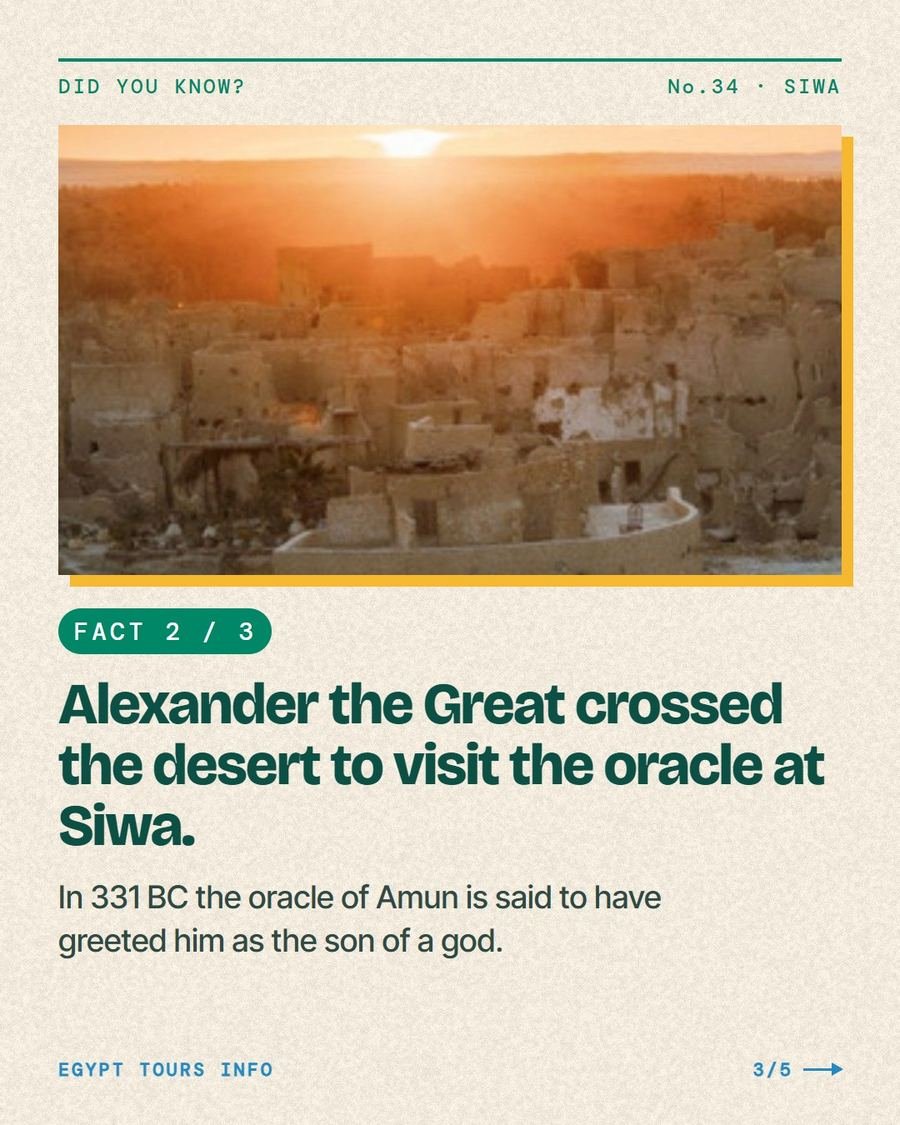
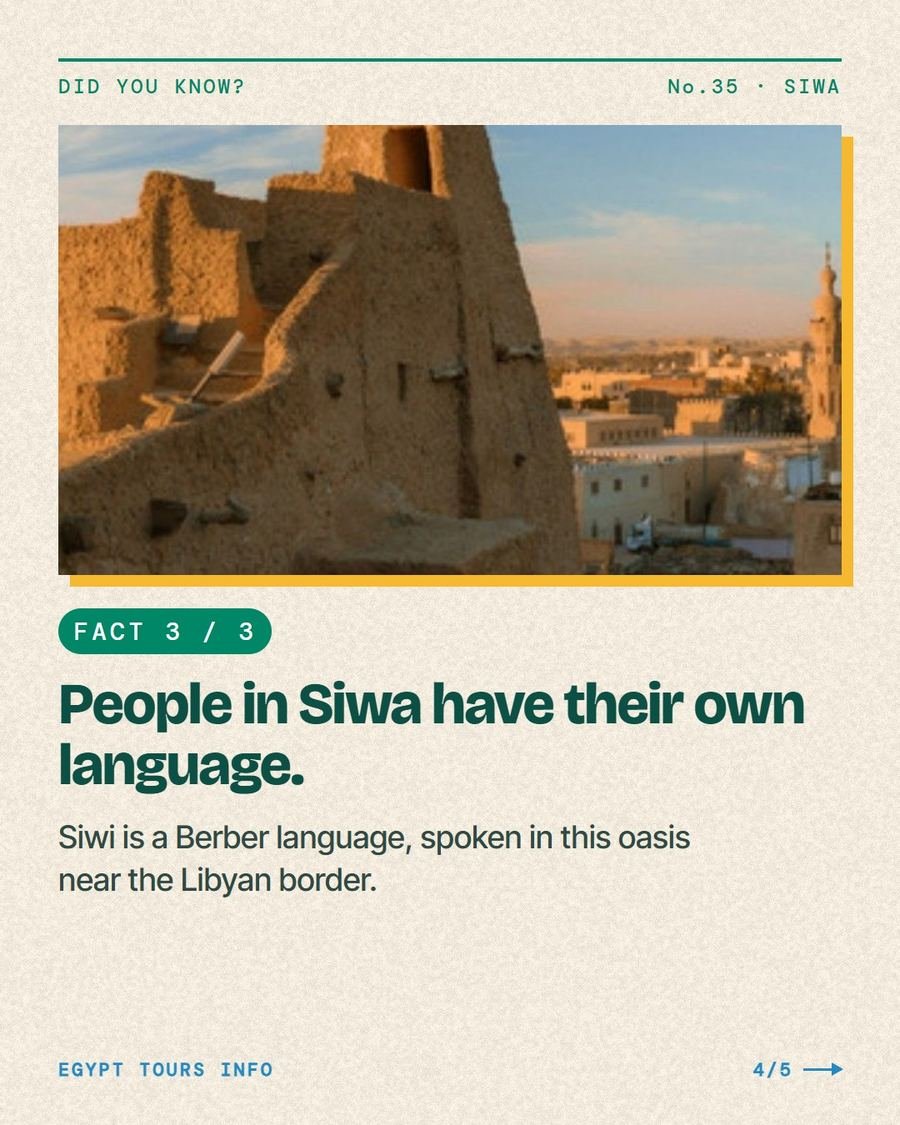

People have lived in and around Siwa since prehistoric times, and stone tools found nearby are thousands of years old. The oasis appears in Egyptian records from the time of the pharaohs, and the Temple of Amun dates mainly from the 26th Dynasty, around the 6th century BC.

Three full days let you see Siwa without rushing.
Add a fourth day if you want time to rent a bike and wander through the palm groves.

Siwa is in Matrouh Governorate in the far west of Egypt, about 50 km from the Libyan border and roughly 560 km west of Cairo as the crow flies. By road it is about 300 km south of Marsa Matrouh on the Mediterranean coast, which is where the only main road into the oasis begins.
Yes, if you have at least three or four days and like quiet places. Siwa is not for a short trip: the journey alone takes most of a day each way. It also suits travellers who are happy without nightlife or alcohol. If you only have a week in Egypt, the White Desert gives you a desert night closer to Cairo.
Bring home Siwa dates and olive oil, sold in the market around the main square. Siwan embroidery, with bright silk on dark cloth and tiny shell buttons, is the classic souvenir. Rock salt from the lakes is carved into lamps and bowls. For food, try the local dates with fresh bread and Siwan tea, and expect simple restaurants rather than fine dining.

The best time is from October to April. Days are warm and nights are cool, and in December and January they can be cold, so bring a jacket. Summer is very hot, often above 40°C. The Siyaha festival, a big local celebration of peace and harvest, takes place around the full moon in October.
Plan at least 3 nights, or 4 if you want a night camping in the Great Sand Sea. One day is enough for the sights around town, and a second day for the springs, the salt lakes and a desert trip. With the long journey each way, a Siwa trip from Cairo takes 5 to 6 days in total.
Siwa is conservative, so dress modestly in town: shoulders and knees covered for everyone. Bring a swimsuit for the springs and salt lakes, but cover up afterwards. Pack sun protection, comfortable shoes and a warm layer for winter evenings and desert nights.
Yes. Siwa is a small, friendly community, and tourists visit all year. The road from Marsa Matrouh has police checkpoints, and trips into the Great Sand Sea need permits, which local operators arrange. As anywhere in the desert, travel with a licensed guide and carry plenty of water.
Not in town: you can explore Shali, the springs and the Temple of Amun on your own by bike or tuk-tuk. For the Great Sand Sea you do need a local driver with a 4×4 and the permits. A local guide is also the best way to learn about Siwi culture.
About 9 to 10 hours by road, usually with a stop in Alexandria or Marsa Matrouh.
Commercial flights are rare, so almost everyone arrives by road.
Desert trips beyond the oasis need permits, which licensed local operators arrange. Carry your passport for road checkpoints.
No. Siwa is a conservative town, and alcohol is not sold.
October, November, March and April have warm days and comfortable nights.
Yes, if you have the time. Siwa takes effort to reach, but it rewards you with springs, salt lakes, dunes and a culture you will not find anywhere else in Egypt. Go between October and April, stay at least three nights, and leave time for a sunset at Fatnas and a night in the desert.
For desert trips closer to Cairo, read our guides to Bahariya Oasis, the White Desert and Wadi El Hitan.
Book a nearby tour: Siwa is not included in our tours yet. For a desert trip from Cairo, see the 3-day Bahariya Oasis and White Desert tour or all our Western Desert tours.
Book this experience: Western Desert tours.
Siwa Oasis – A Complete Guide for New Visitors
CAIRO: Read our article Top 10 Best Things to Do in Cairo We also have a 3 day Cairo Itinerary and how to take a day trip Saqqara.
LUXOR: Get on overview on what to do in our article Top 10 Things to do in Luxor , Why you should visit Luxor and We also have A Comprehensive Guide to Explore Luxor Attractions
ASWAN: Read our articles about the top attractions in Aswan and When to visit Aswan and we also have detailed A Comprehensive Travel Guide to Aswan
ALEXANDRIA: Read our article about The top attractions in Alexandria and when you should visit Alexandria and we also have a detailed guide to Alexandria and how to take a day trip from Cairo to Alexandria
Dahab: Read our article about the best things to do in Dahab and when you should visit Dahab and we also have an article about the top attractions in Dahab and how to spend a day in Dahab.
Bahariya Oasis: Read our article about The Best Things to Do in Bahariya Oasis and when you should visit Bahariya Oasis and we also have a detailed guide about how to take 2 Days Trip to Bahariya Oasis from Cairo:
EGYPT ITINERARY: With 8 days in Egypt, visit Cairo, Luxor, Aswan and Abu Simbel.
TRAVEL ADVICE: Here is list of important things to know before visit Egypt. the best time to visit Egypt, Advice for first-time travelers in Egypt, and Top 5 Safety Tips for Traveling to Egypt in 2024 – 2025
All rights reserved © Egypttoursinfo.com Republishing this article and/or any of its contents (text, photography, etc.), in whole or in part, is strictly prohibited.
Join one of our Western Desert tours with a local driver and guide.

Egypt travel blog dedicated to providing the best possible information for traveling to Egypt. Our articles include information on best holiday Destinations in Egypt, Things to do in Egypt, How to get Around in Egypt, and of course planning Your Perfect Itinerary for your holidays in Egypt.


