Many visitors arrive knowing marhaba, the “hello” taught in most Arabic phrasebooks, and then hardly hear it. Egyptians understand it, but on the street, in shops and at hotel desks the greetings you’ll actually hear are Salām, Ahlan and, above all, Ezayyak? – “how are you?”.
This lesson takes 13 everyday greetings one at a time: what each means, how to say it, when to use it, the reply people expect, and how it sounds in a real moment in Egypt.
| Say this | Meaning | When to use it |
|---|---|---|
| Salām | Hello / Peace | Any time, with anyone |
| Ahlan wa sahlan | Welcome | When you arrive, or to answer a welcome |
| Ezayyak? / Ezayyek? | How are you? (man / woman) | Right after hello |
| Kwayyes, el hamdu lillah | Good, thank God | When someone asks how you are |
| Ma’a el salama | Goodbye | When you leave |
How to read the numbers: When Egyptians write Arabic with Latin letters, numbers stand for sounds English doesn’t have: 3 is the deep “ain” from the throat and 7 is a breathy “h”. So Saba7 sounds like “sa-bah”, with a soft h.
Listen: how a Cairo local says it
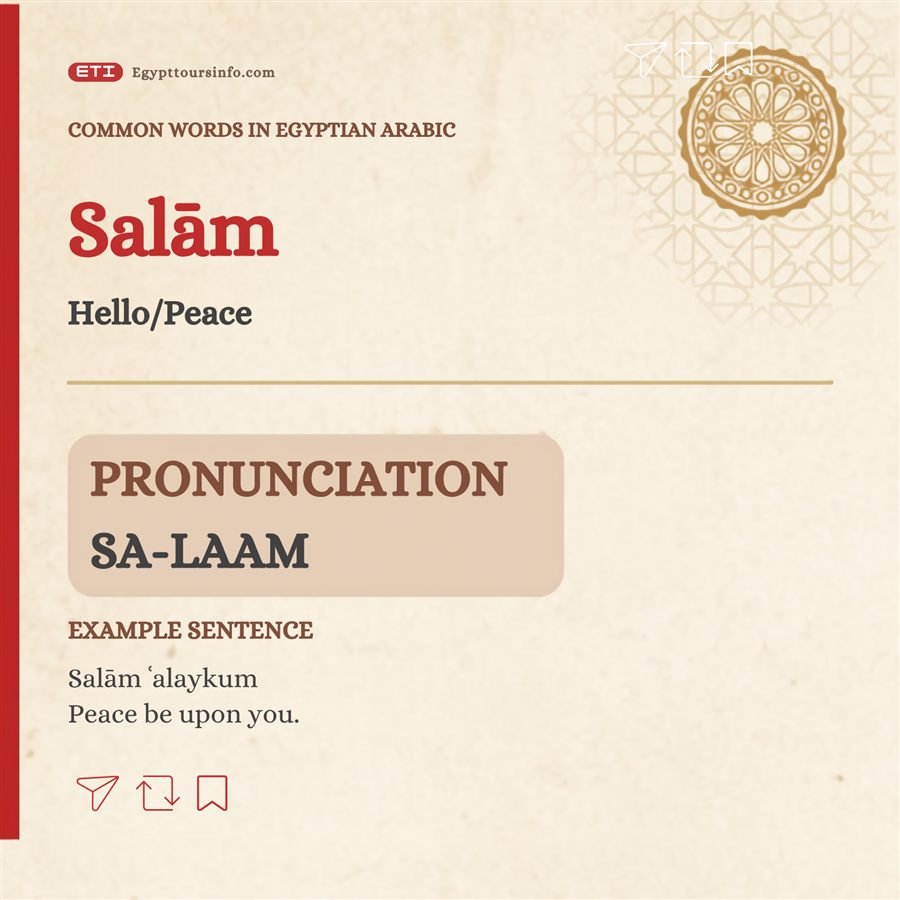
Salām (sa-LAAM) means “peace” and is the simplest hello. The full form, Salām ‘alaykum (“peace be upon you”), is the standard Muslim greeting; the reply is Wa ‘alaykum el salām.
How to use it: Use it with anyone, any time – it’s the safest greeting there is. Many Egyptians, Christians especially, also greet with Ahlan or Saba7 el kheer; visitors can use any of them.
In real life: You walk into a small shop in Khan El Khalili: Salām ‘alaykum – and the shopkeeper answers Wa ‘alaykum el salām, ahlan!
Listen: how a Cairo local says it
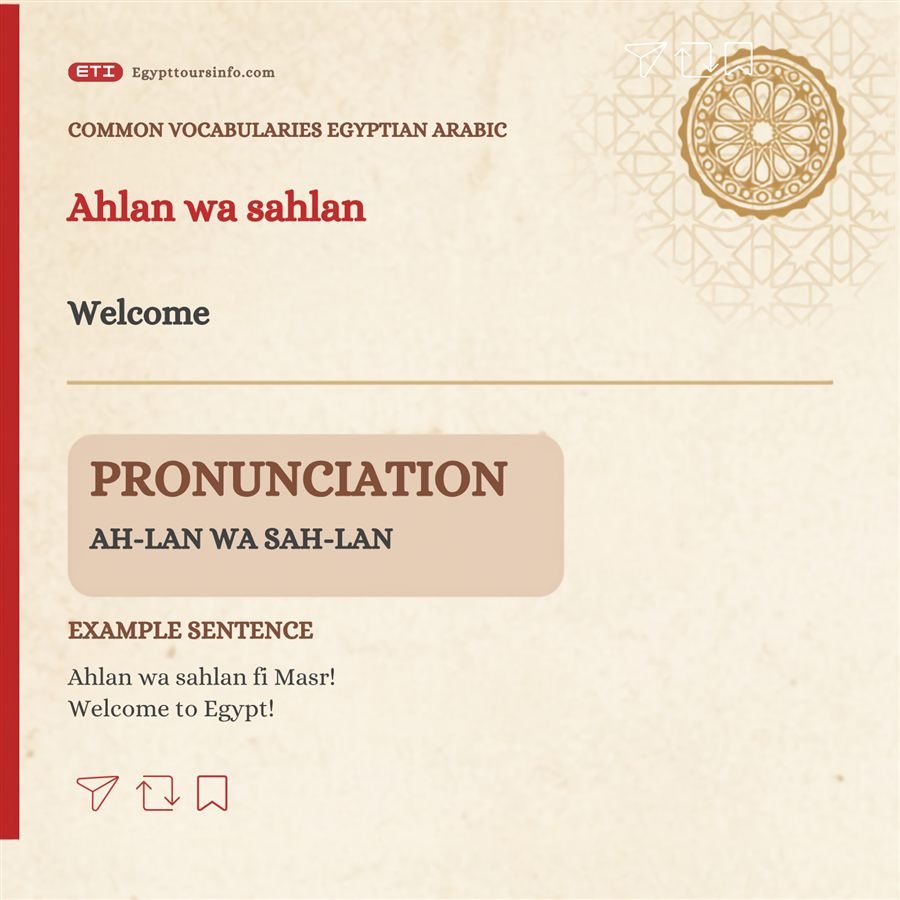
Ahlan wa sahlan (AH-lan wa SAH-lan) means “welcome”, often shortened to Ahlan.
How to use it: You’ll hear it at hotels, shops and in homes. To reply, say Ahlan bik to a man or Ahlan biki to a woman.
In real life: At hotel check-in the receptionist says Ahlan wa sahlan fi Masr! – welcome to Egypt – and you answer Ahlan bik, shokran.
Listen: how a Cairo local says it
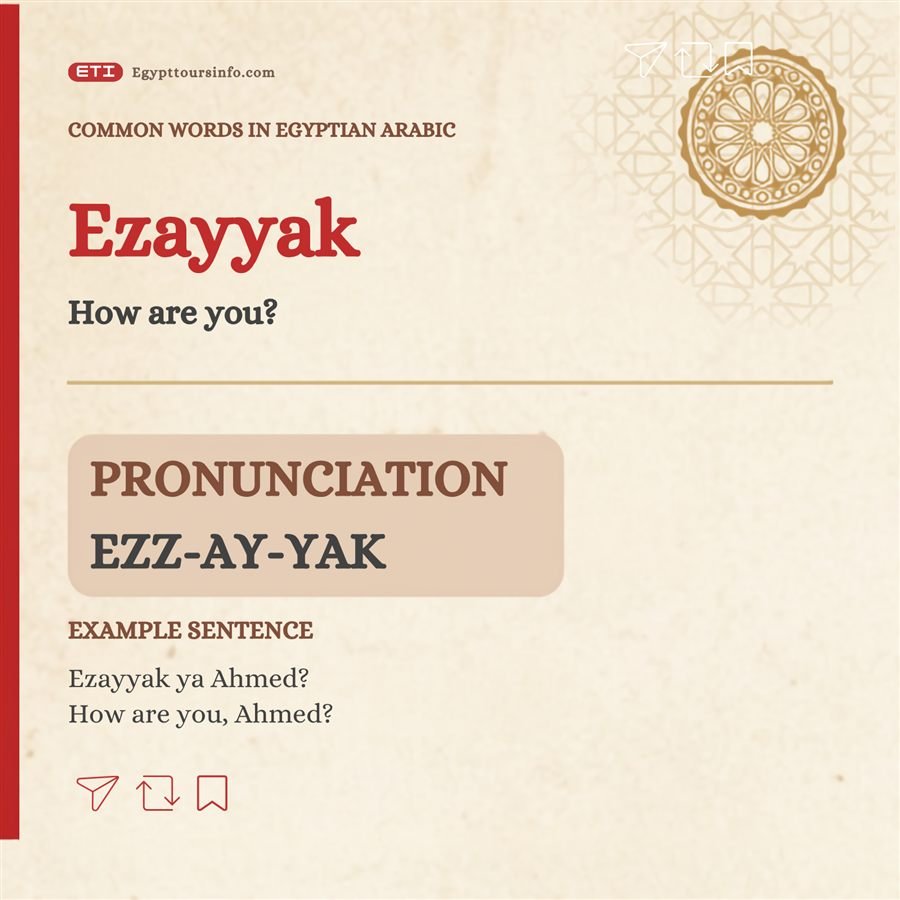
Ezayyak? (ez-ZAY-yak) means “how are you?” – the word to learn first. Say Ezayyek? to a woman and Ezayyoko? to a group.
How to use it: Use it right after hello, every time. Egyptians ask it constantly, often more than once in the same conversation. To an older man, Ezayyak ya hag sounds respectful and warm.
In real life: Your guide picks you up in the morning: Saba7 el kheer! Ezayyak?
Listen: how a Cairo local says it
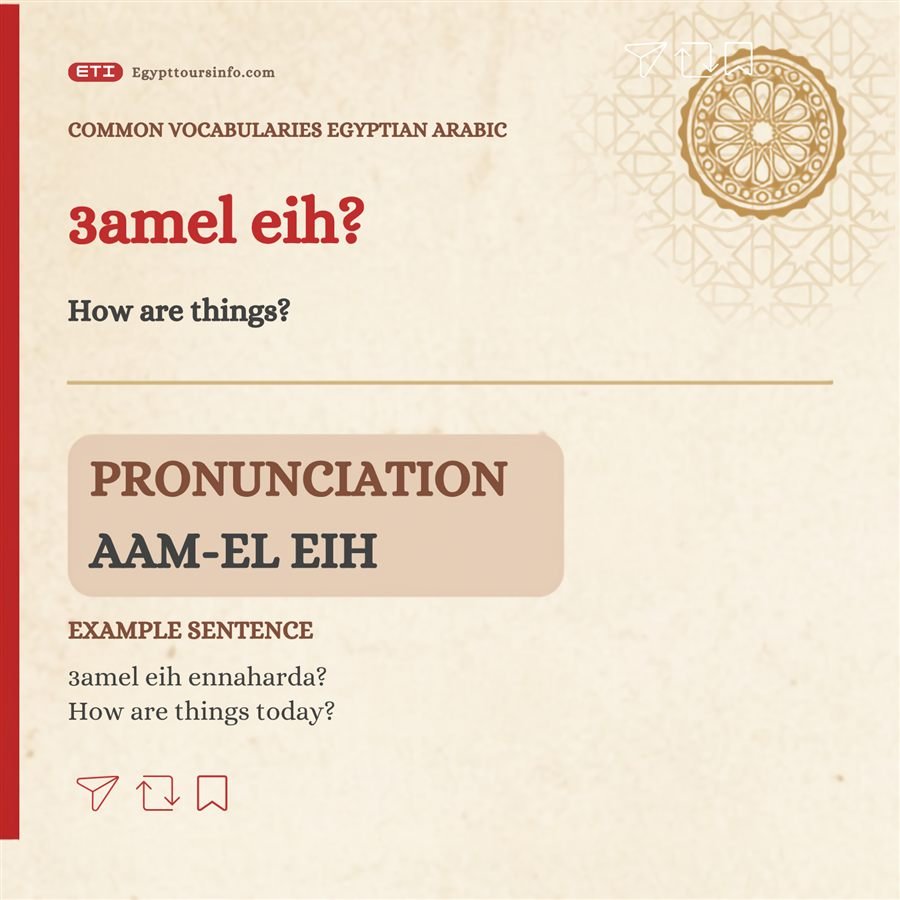
3amel eih? (AAM-el eih) means “how are things?” – a more casual “how are you”.
How to use it: Keep it for people your own age or someone you’ve met a few times. With older people or officials, stay with Ezayyak.
In real life: Day three with the same driver: 3amel eih ennaharda? – how are things today?
Listen: how a Cairo local says it
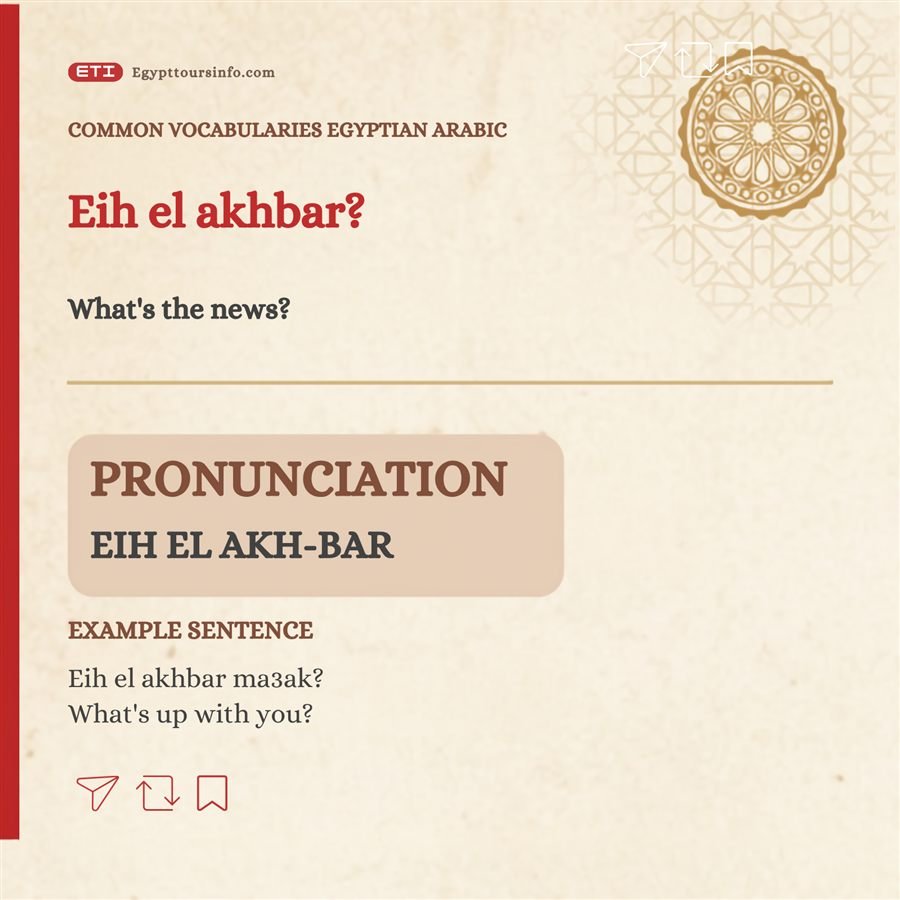
Eih el akhbar? (eih el akh-BAR) means “what’s the news?”, close to “what’s up?”.
How to use it: Use it with friends and people you know; the usual answer is kollo tamam – all good.
In real life: Meeting a friend at a café: Eih el akhbar ma3ak? – what’s up with you?
Listen: how a Cairo local says it
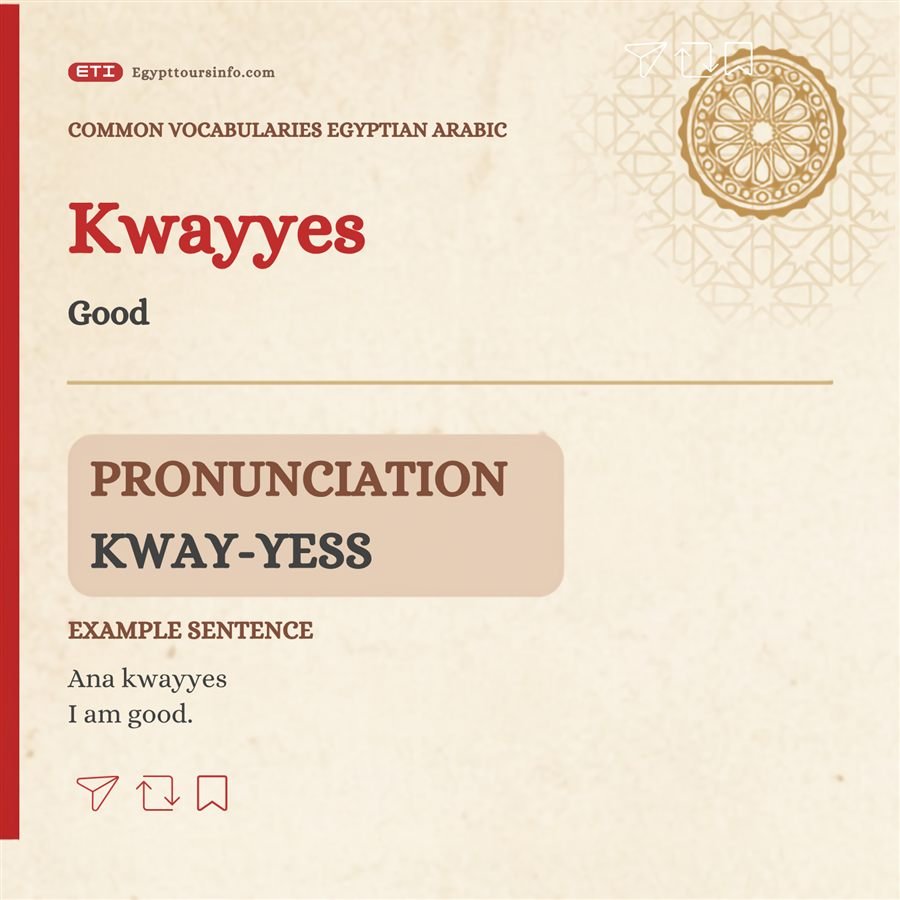
Kwayyes (KWAY-yes) means “good, fine” – the basic answer to “how are you?”. A woman says kwayyesa.
How to use it: Answer, then always ask back: W enta? (“and you?”) to a man, W enti? to a woman. Stopping after your own answer can sound abrupt.
In real life: Ezayyak? – Kwayyes, el hamdu lillah. W enta?
Listen: how a Cairo local says it
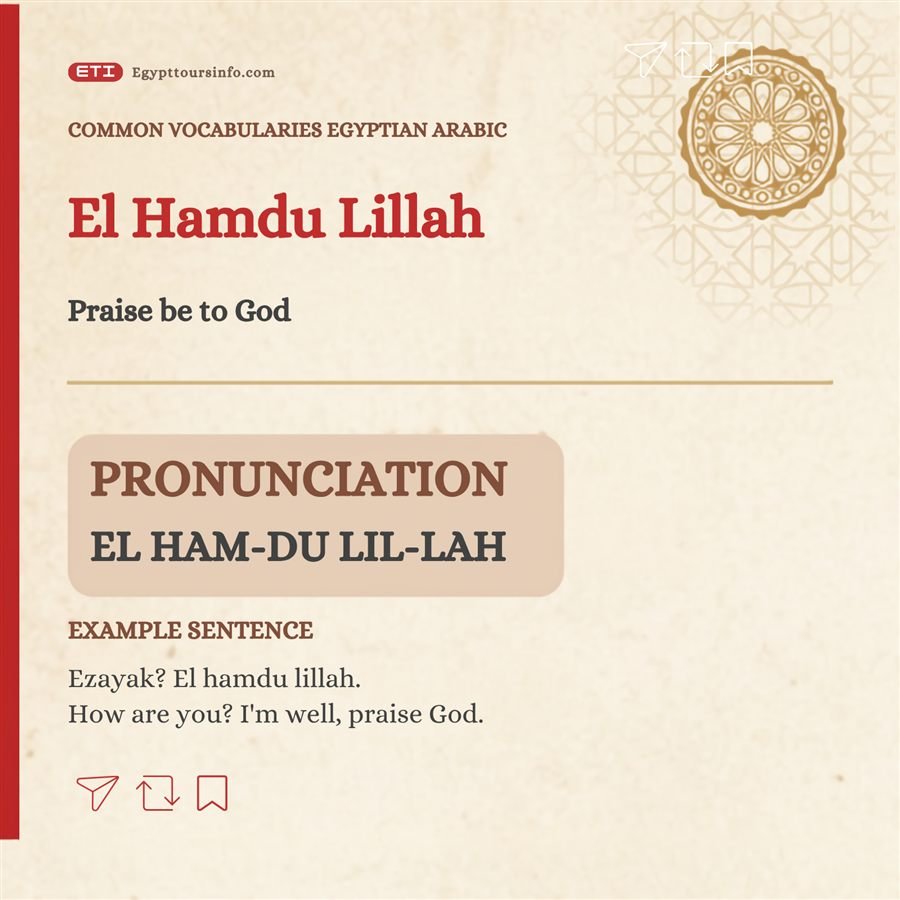
El hamdu lillah (el HAM-du lil-LAH) means “praise be to God”.
How to use it: Egyptians add it to “how are you?” answers whether the day is going well or badly, so it’s always a safe reply.
In real life: A shopkeeper asks how your trip is going: Kollo tamam, el hamdu lillah – all good, thank God.
Listen: how a Cairo local says it
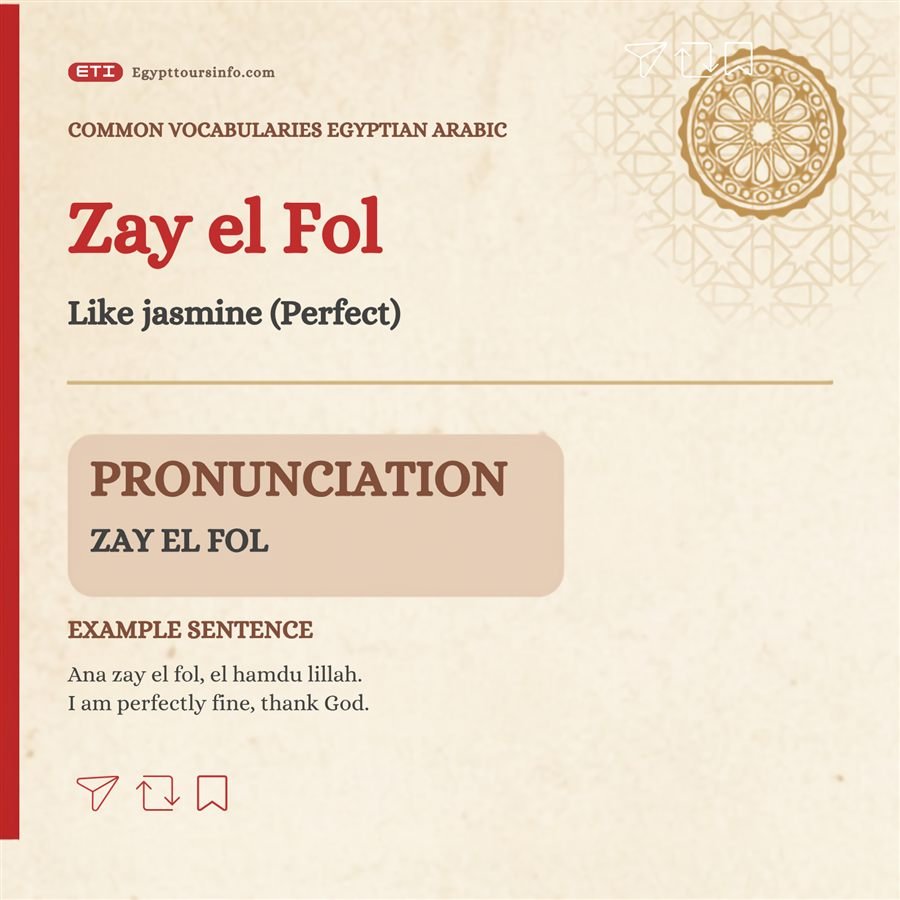
Zay el fol (zay el FOL) literally means “like jasmine” – “perfect, excellent”.
How to use it: Use it to sound warm and very Egyptian when things are going well.
In real life: Ezayyak? – Ana zay el fol, el hamdu lillah! – I’m perfectly fine, thank God.
Listen: how a Cairo local says it
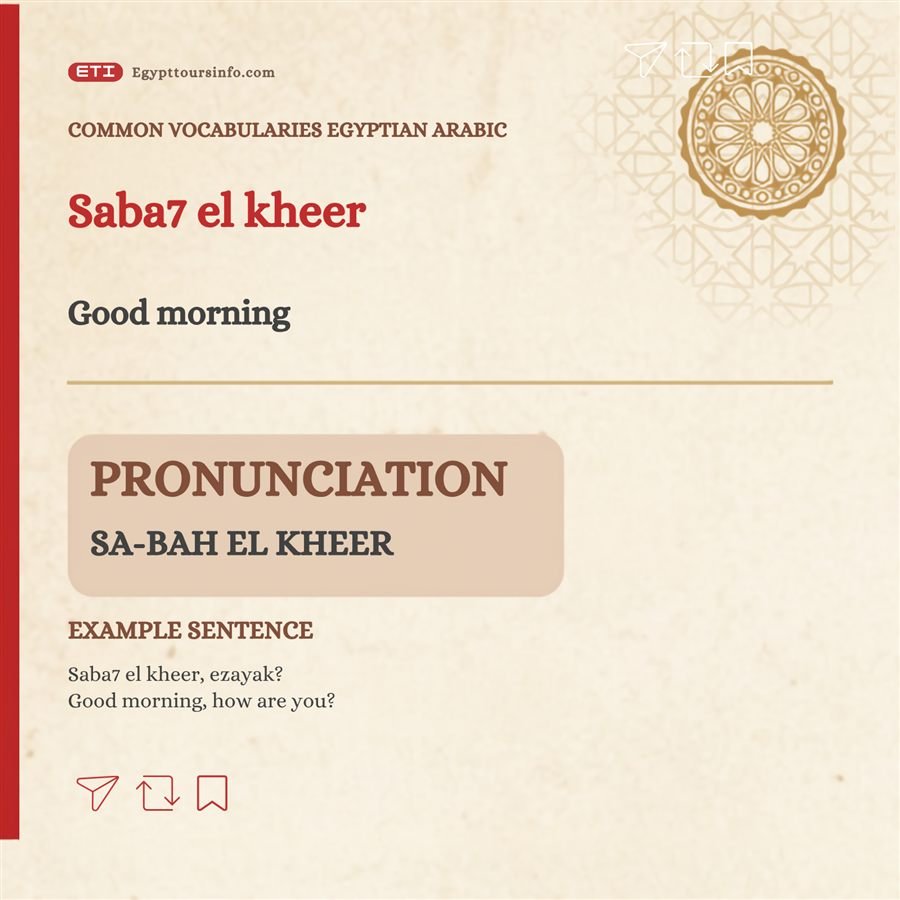
Saba7 el kheer (sa-BAH el KHEER) means “good morning”, literally “morning of goodness”. The 7 is a soft, breathy h.
How to use it: Use it until about noon. Egyptians answer by “raising” it: Saba7 el noor – “morning of light”.
In real life: At breakfast the waiter says Saba7 el kheer – try answering Saba7 el fol (“morning of jasmine”). It usually gets a laugh.
Listen: how a Cairo local says it
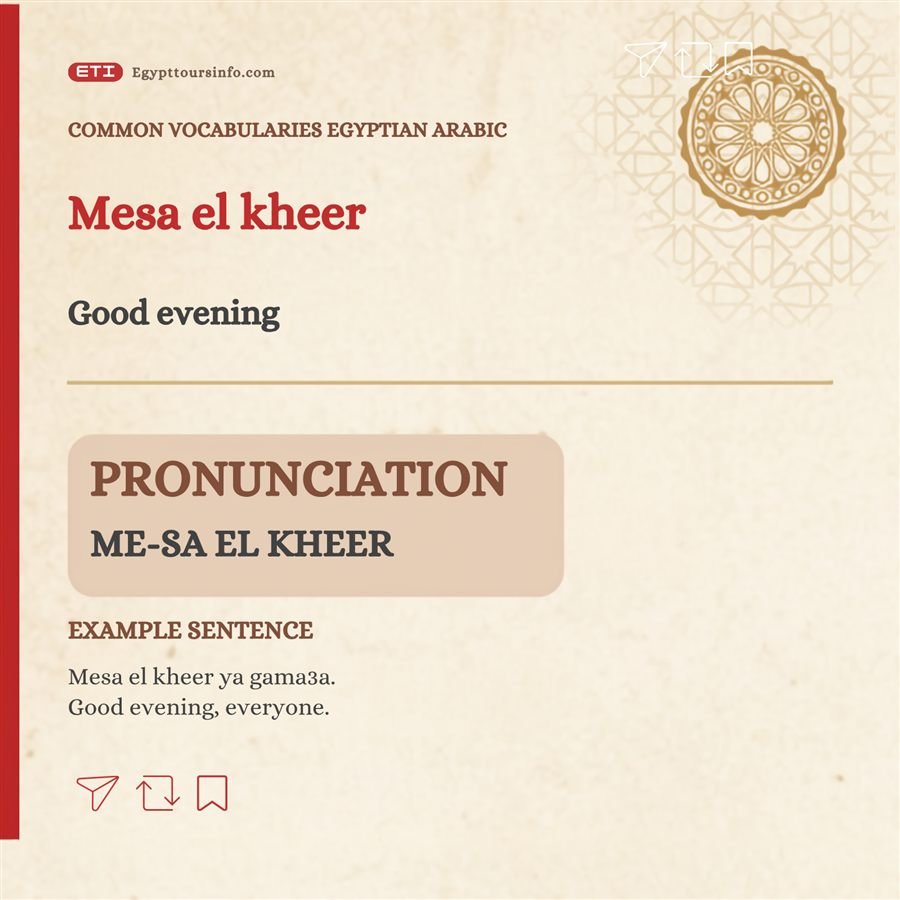
Mesa el kheer (ME-sa el KHEER) means “good evening”.
How to use it: Use it from the afternoon on. The reply is Mesa el noor – “evening of light”.
In real life: Back at the hotel after a day at the Pyramids: Mesa el kheer! – Mesa el noor, ahlan!
Listen: how a Cairo local says it
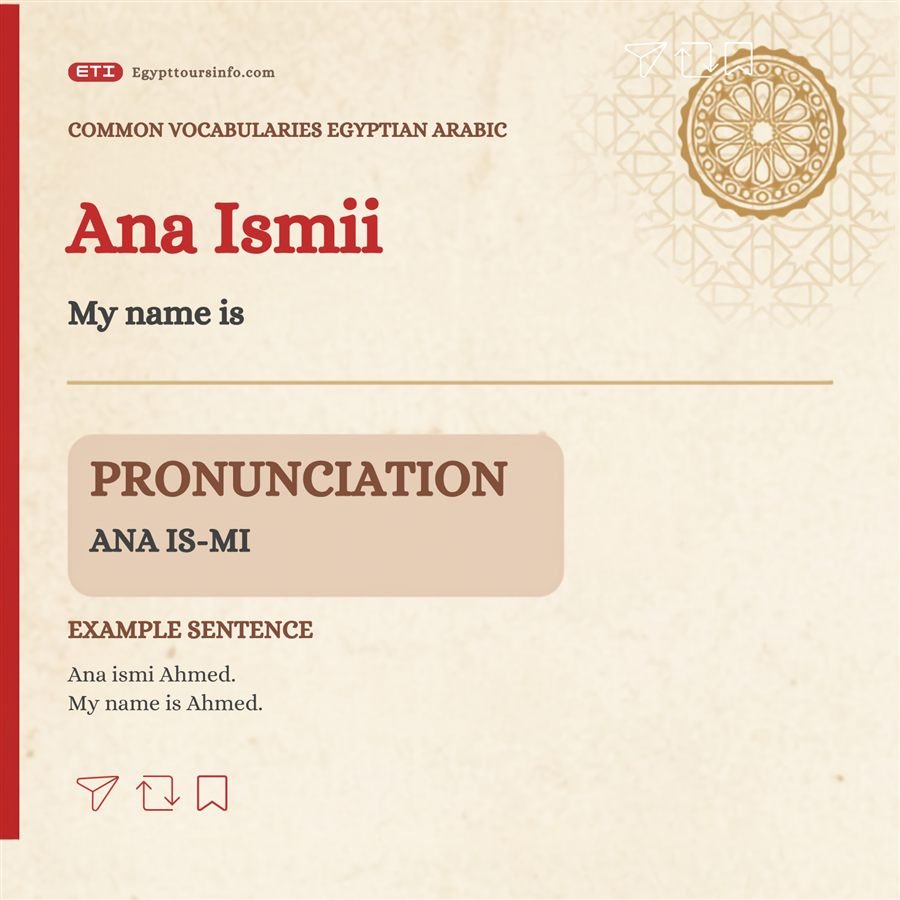
Ana ismi… (A-na IS-mi) means “my name is…”.
How to use it: To ask someone’s name, say Ismak eih? to a man or Ismek eih? to a woman.
In real life: Meeting your guide: Ana ismi Sarah. Ismak eih? – Ana ismi Ahmed. Ahlan ya Sarah!
Listen: how a Cairo local says it
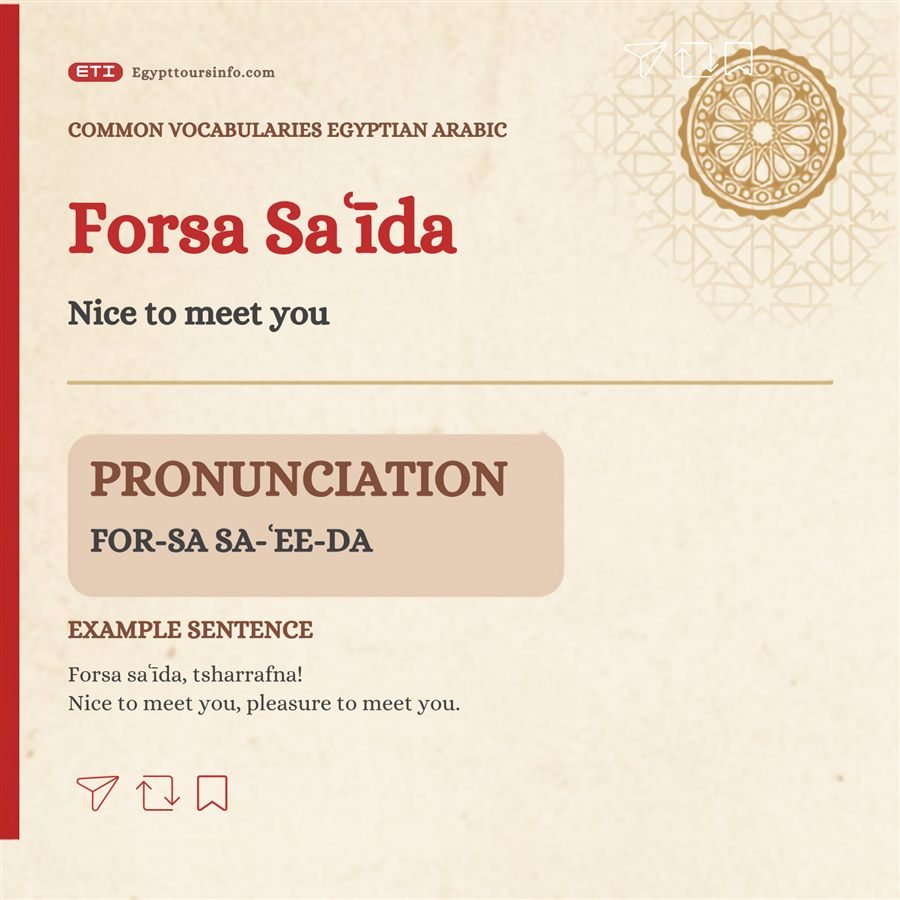
Forsa sa’ida (FOR-sa sa-‘EE-da) means “nice to meet you”, literally “a happy opportunity”.
How to use it: Say it after introductions. The classic reply is Ana as’ad – “I’m happier” – and people often add Tsharrafna (“we’re honoured”).
In real life: At the end of a first meeting: Forsa sa’ida! – Ana as’ad, tsharrafna.
Listen: how a Cairo local says it
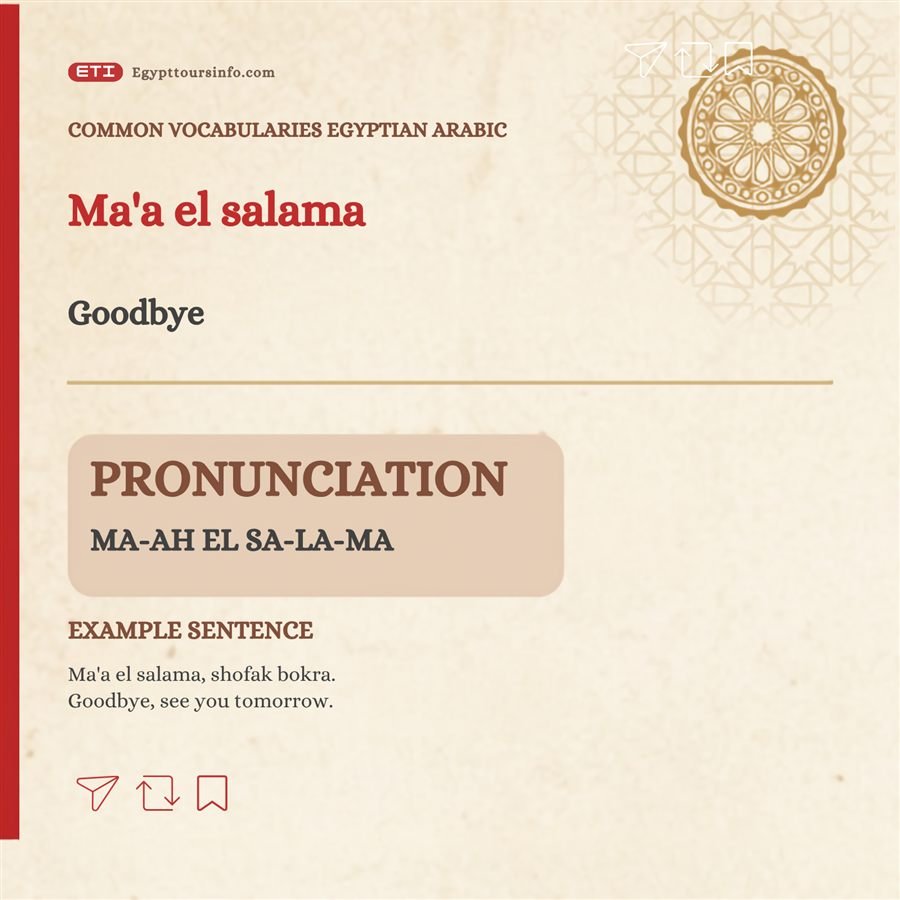
Ma’a el salama (MA-‘a el sa-LA-ma) means “goodbye”, literally “go with safety”.
How to use it: The reply is Allah yesallemak to a man or Allah yesallemek to a woman. If you’ll meet again, add ashoofak bokra – see you tomorrow.
In real life: Leaving the café: Ma’a el salama, ashoofak bokra! – Allah yesallemak!
More on local customs in our guide to Egypt’s culture and customs.
Screenshot this table and keep it on your phone for the trip.
| Egyptian Arabic | Pronunciation | Meaning | Reply |
|---|---|---|---|
| Salām (‘alaykum) | sa-LAAM | Hello / Peace be upon you | Wa ‘alaykum el salām |
| Ahlan wa sahlan | AH-lan wa SAH-lan | Welcome | Ahlan bik / biki |
| Ezayyak? / Ezayyek? | ez-ZAY-yak | How are you? | Kwayyes, el hamdu lillah |
| 3amel eih? | AAM-el eih | How are things? | Kwayyes / Zay el fol |
| Eih el akhbar? | eih el akh-BAR | What’s the news? | Kollo tamam |
| Kwayyes / Kwayyesa | KWAY-yes | Good | – |
| El hamdu lillah | el HAM-du lil-LAH | Praise be to God | – |
| Zay el fol | zay el FOL | Perfect | – |
| Saba7 el kheer | sa-BAH el KHEER | Good morning | Saba7 el noor |
| Mesa el kheer | ME-sa el KHEER | Good evening | Mesa el noor |
| Ana ismi… | A-na IS-mi | My name is… | Ana ismi… |
| Forsa sa’ida | FOR-sa sa-‘EE-da | Nice to meet you | Ana as’ad |
| Ma’a el salama | MA-‘a el sa-LA-ma | Goodbye | Allah yesallemak |
How do you say hello in Egyptian Arabic?
Say Salām or Salām ‘alaykum. Ahlan is just as common and a little more casual.
Is “marhaba” used in Egypt?
It’s understood, but you’ll hear Ahlan, Salām and Ezayyak far more often.
What’s the difference between Egyptian Arabic and Modern Standard Arabic?
Modern Standard Arabic is used for writing, news and formal speeches. Egyptian Arabic (Masri) is what people speak day to day, and thanks largely to Egyptian films and TV it’s widely understood across the Arab world.
Can non-Muslims say “Salām ‘alaykum”?
Yes. Visitors who use it are welcomed, and you can also use Ahlan or Saba7 el kheer.
You don’t need to be fluent. A Salām, an Ezayyak? and a Saba7 el fol at breakfast are enough to change how people talk to you. The easiest place to practise is on a day out with a local guide, who will happily add a few words along the way.
Next lesson: polite words in Egyptian Arabic – please, thank you, sorry and the phrases Egyptians love to hear.
Practise with a local: our Giza Pyramids and Egyptian Museum day tour from $50, or a few days with a guide on our Cairo City Break from $200 (prices October 2026).
All rights reserved © Egypttoursinfo.com Republishing this article and/or any of its contents (text, photography, etc.), in whole or in part, is strictly prohibited.
Hand-picked day tours and trips from Cairo, with hotel pickup and friendly local guides.