Last updated on November 12th, 2026 at 07:22 pm
Aswan is quieter and more relaxed than Luxor, with granite rocks, islands and Nubian culture on the Nile. This guide lists seven top things to do in Aswan: Philae Temple, a felucca ride, a Nubian village, the High Dam, the Unfinished Obelisk, the souk and Elephantine Island. Prices are “from” prices, so check the tour pages. For longer trips, see our day trips from Aswan guide.
Use this table to plan your days. Ticket prices are for foreign adults (checked October 2026) and change, so check at the gate.
| Thing to do | Time | Cost | Best time |
|---|---|---|---|
| Philae Temple | 2 hours with the boat | EGP 550 ticket + boat fare | Morning |
| Felucca ride | 1 to 2 hours | Price per boat, agree first | Late afternoon and sunset |
| Nubian village | Half a day | Tour from $25 | Afternoon |
| Aswan High Dam | 30 to 45 minutes | Small entry fee | With Philae |
| Unfinished Obelisk | 30 to 45 minutes | Site ticket | Morning |
| Aswan souk | 1 to 2 hours | Free to walk | Evening |
| Elephantine Island | 2 to 3 hours | Local ferry + site ticket | Morning or late afternoon |
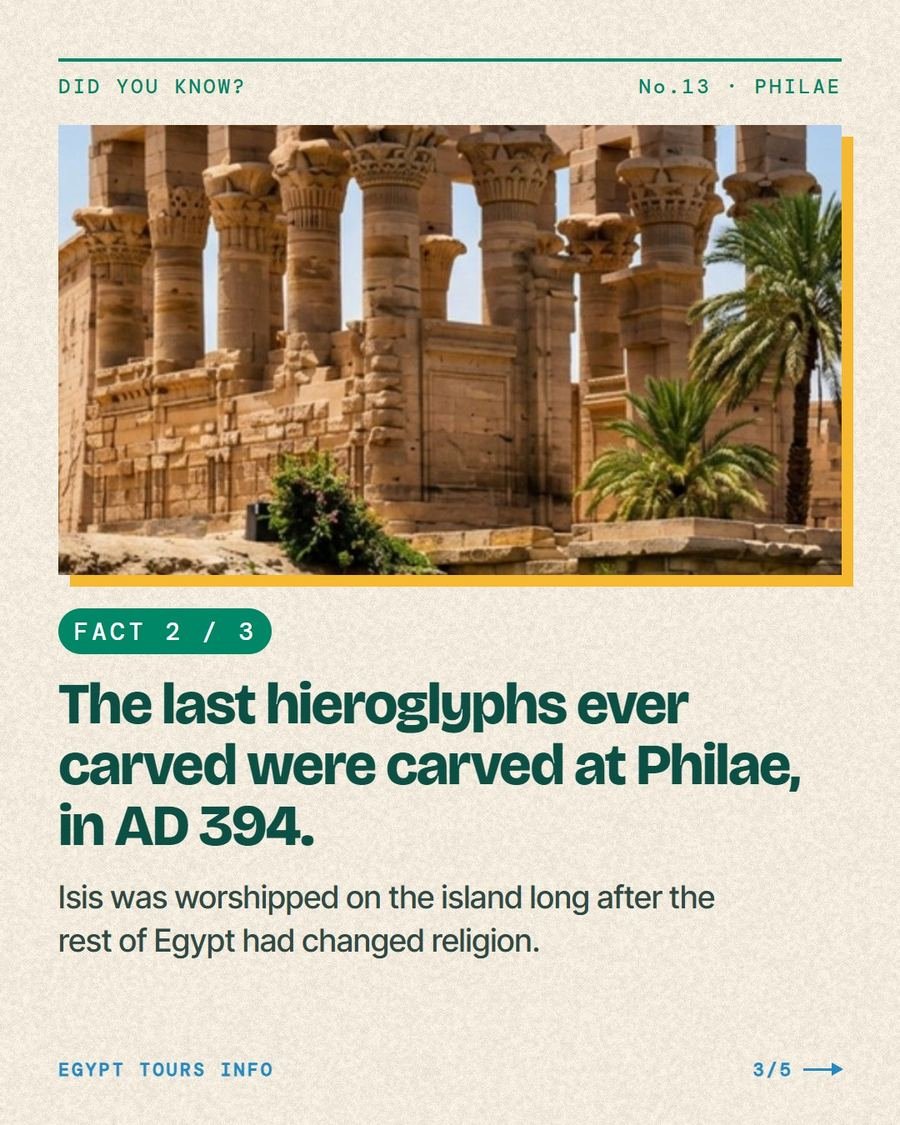
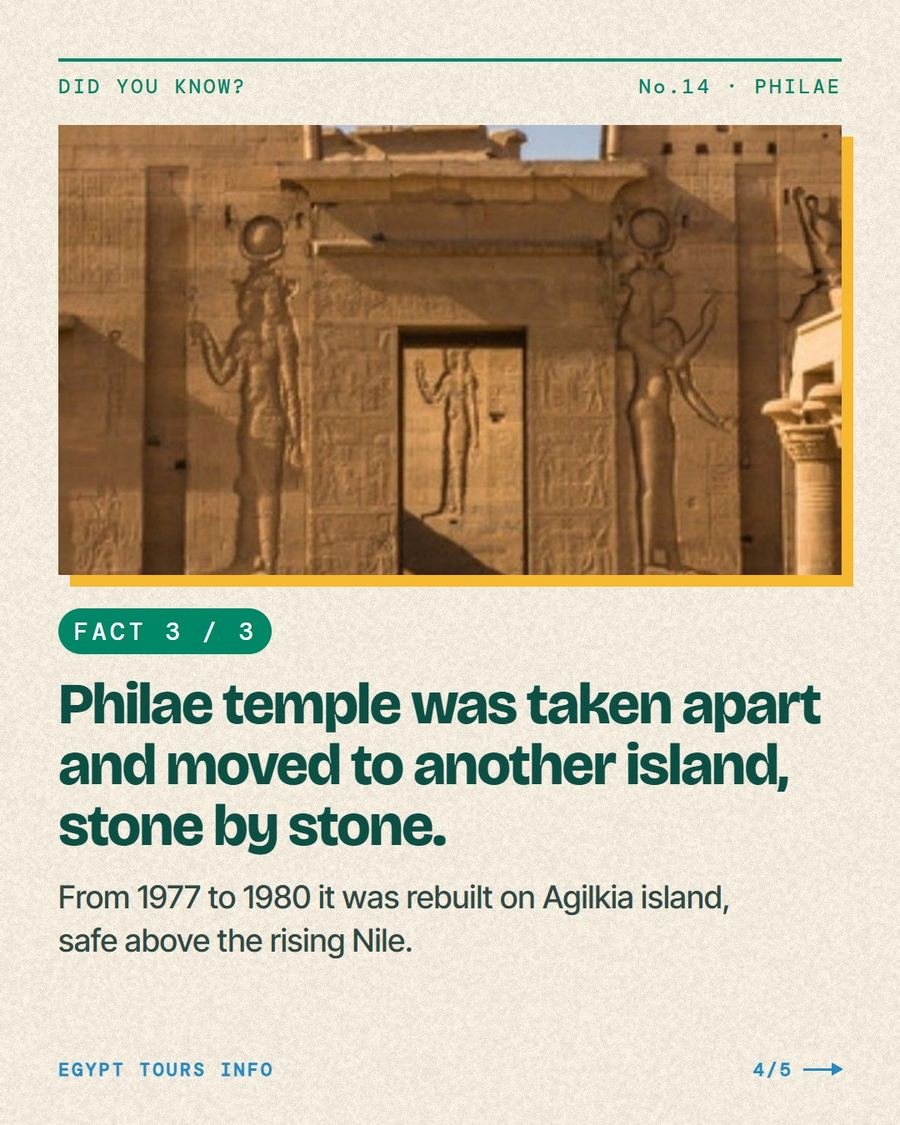
Philae is the most beautiful temple in Aswan and the one to put first. It was built for the goddess Isis, mostly in the Ptolemaic and Roman periods, and the last hieroglyphic inscription known in Egypt was carved here in AD 394. When the old Aswan Dam flooded the island for much of the year, UNESCO took the temple apart and rebuilt it, stone by stone, on the higher Agilkia Island between 1972 and 1980.
You reach it by a short motorboat ride from the Shellal landing. The boat is paid separately from the ticket, so agree the price for the return trip first. Inside, look for the colonnade, the birth house and Trajan’s Kiosk by the water. Read our full Philae Temple guide, or join the Philae, Unfinished Obelisk and High Dam tour from $25, which includes the boat.
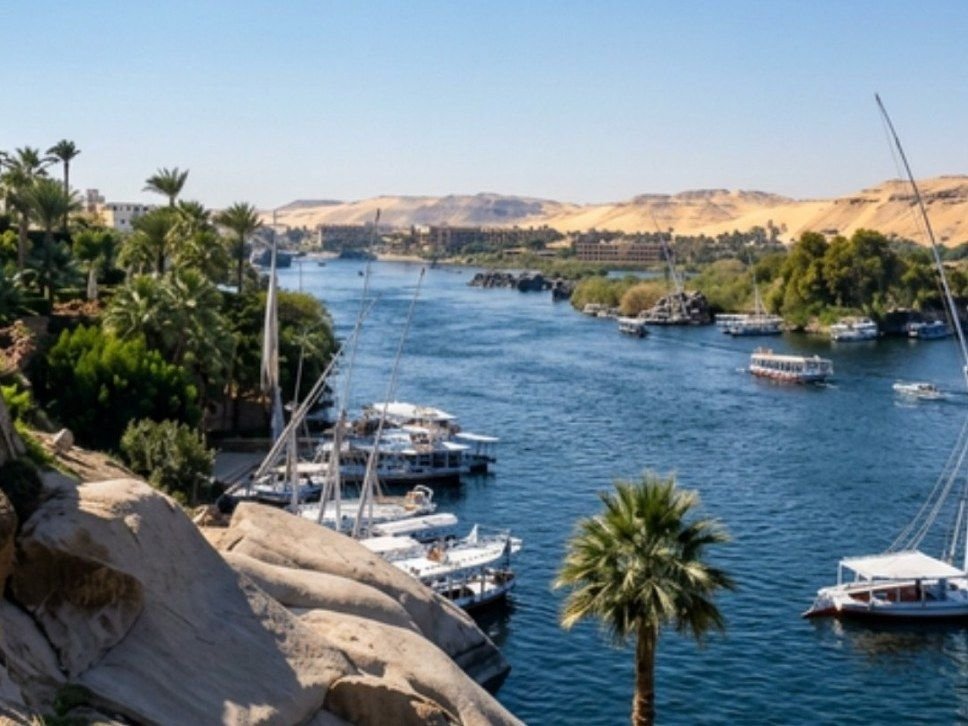
A felucca is a traditional wooden sailing boat, and Aswan is the best place in Egypt to ride one. The Nile here is wide and full of granite islands, and the west bank is golden desert. A typical ride takes one or two hours, past Elephantine Island and the Botanical Garden on Kitchener’s Island, and ends with the sunset behind the Tombs of the Nobles.
Captains wait along the Corniche. The price is for the whole boat, not per person, so agree on the price, the route and the time before you get on. Late afternoon is the classic time; there is little shade, so bring a hat.
The Nubian villages on the west bank, like Gharb Soheil, are a short motorboat ride north of the city. The houses are painted in bright blues, yellows and pinks, often with domed roofs. Visitors usually stop at a family house for tea and Nubian bread, see the crocodiles some families keep, and walk to the sand dunes behind the village.
Nubians have their own languages and music, and many families moved here after Lake Nasser flooded old Nubia in the 1960s. Read our Nubian Village guide or book the Nubian village tour from $25, which includes the boat ride.
The Aswan High Dam was built between 1960 and 1970 with Soviet help. It ended the yearly Nile flood, gave Egypt electricity and water all year, and created Lake Nasser, one of the largest artificial lakes in the world. The dam also forced tens of thousands of Nubians to move, and led to the rescue of temples like Abu Simbel and Philae.
The visit is short: you drive across the top, see Lake Nasser on one side and the Nile on the other, and stop at the monument to Egyptian-Soviet friendship. It is usually combined with Philae and the Unfinished Obelisk in a half-day tour.
In the granite quarries just south of the city lies the Unfinished Obelisk. If it had been finished, it would have stood about 42 metres tall and weighed over 1,000 tonnes, larger than any obelisk ever raised. Workers abandoned it when a crack appeared in the stone. It is often dated to the reign of Hatshepsut, but this is not certain.
The site shows how ancient Egyptians cut granite: you can still see the marks of the dolerite pounders they used to shape it. A visit takes 30 to 45 minutes.
The Aswan souk runs along Sharia el-Souk, one street back from the Corniche. It sells spices, dried hibiscus (karkadeh), Nubian baskets, scarves, perfume oils and souvenirs. It is calmer than Cairo’s Khan el-Khalili, and evenings are the best time, when the heat drops and the street fills with locals.
Prices are not fixed, so bargain politely and with a smile. Read our Aswan souk guide and our haggling tips before you go.
Elephantine Island sits right in front of the city. It was the ancient frontier town of Yebu, with ruins of the Temple of Khnum, a Nilometer used to measure the flood, and two Nubian villages, Siou and Koti, with quiet lanes and guesthouses. A public ferry crosses from the Corniche for a few pounds. Read our Elephantine Island guide.
Give Aswan at least two full days. Day one: Philae, the High Dam and the Unfinished Obelisk in the morning, the souk in the evening. Day two: Elephantine Island, a felucca at sunset and a Nubian village. Add a third day for Abu Simbel. For more ideas, see our day trips from Aswan and 2 days in Aswan guides.
Book this experience: Aswan Day Tour: Philae Temple, Unfinished Obelisk and High Dam from $25.
Two days for the main sights, three if you add Abu Simbel.
Yes. It is calmer than Luxor, with Philae, the felucca rides, Nubian villages and some of the best Nile views in Egypt.
October to April, when days are warm rather than hot. Summer is very hot, often above 40°C.
Yes. Most visitors go on an early-morning road trip of about three hours each way, or take a short flight.
Yes, Aswan is relaxed and friendly. Expect taxi and boat drivers to offer rides; a polite no is enough.
All rights reserved © Egypttoursinfo.com Republishing this article and/or any of its contents (text, photography, etc.), in whole or in part, is strictly prohibited.
Guided trips with bottled water, transfers and hotels arranged for you.