The Colossi of Memnon are two huge seated statues of Pharaoh Amenhotep III on the West Bank of Luxor, standing alone in the fields beside the road to the Valley of the Kings. They once guarded the entrance to his mortuary temple, the largest ever built in Thebes. Today they are a free roadside stop of 10 to 20 minutes, usually the first sight on a West Bank tour.
| Where | West Bank of Luxor, on the main road to the Valley of the Kings |
| Height | About 18 m each, seated, including the base |
| Built | Around 1350 BC, for Amenhotep III |
| Entry | Free; viewed from the roadside area |
| Time needed | 10 to 20 minutes |
| Best time | Early morning, often right after a sunrise balloon flight |
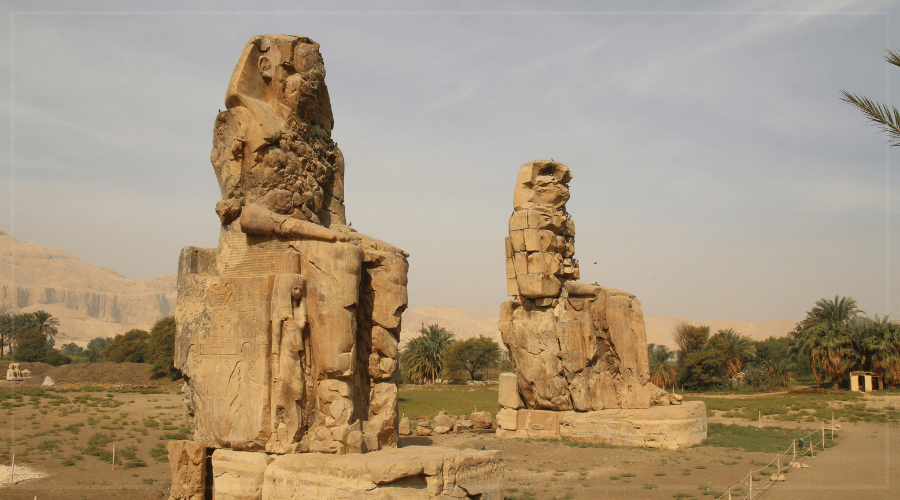
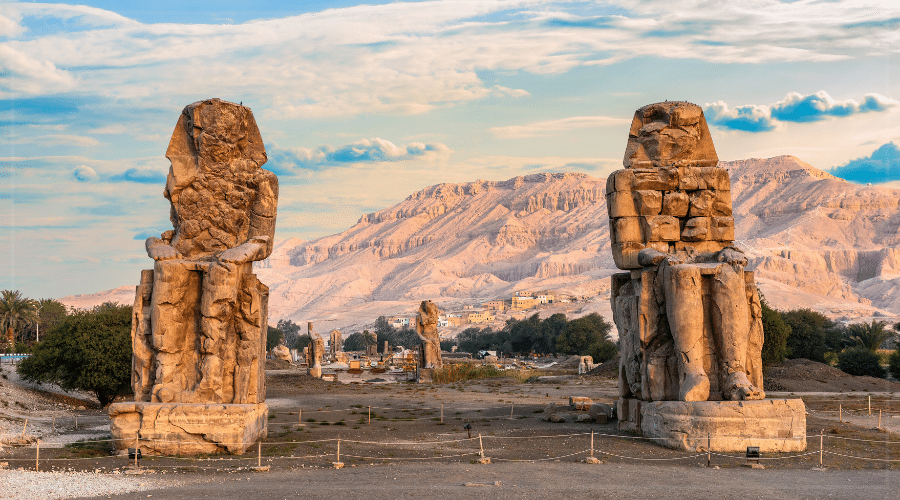
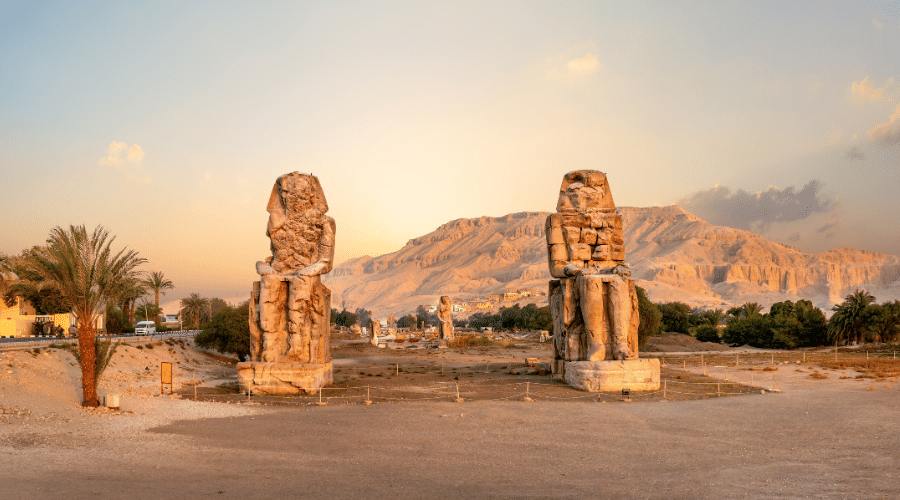
Each statue shows Amenhotep III seated on his throne, hands on his knees, facing east towards the Nile and the rising sun. Smaller figures of his wife Queen Tiye and his mother stand beside his legs. The statues were carved from quartzite sandstone brought from quarries far to the north, near modern Cairo, and moved hundreds of kilometres up the Nile.
Behind them stretched the mortuary temple of Amenhotep III, once larger than Karnak. Built close to the river, it was damaged by floods and later used as a stone quarry, so almost nothing of it remained above ground. Archaeologists working on the site since the late 1990s have uncovered and raised more colossal statues of the king, which you can see in the field behind the Colossi.
After an earthquake in 27 BC cracked the northern statue, it began to make a sound at sunrise, probably as the stone warmed and moisture escaped from the cracks. Greek and Roman travellers believed it was Memnon greeting his mother, the dawn, and the statue became one of the most famous tourist sights of the ancient world. The Roman emperor Hadrian visited in AD 130 with his wife Sabina, and the court poet carved verses on the statue’s leg.
Repairs to the upper part of the statue, traditionally credited to Emperor Septimius Severus around AD 199, stopped the sound, and the statue has been silent ever since.
Yes, visitors can get relatively close to the Colossi of Memnon. However, climbing or touching the statues is strictly prohibited to ensure their preservation.
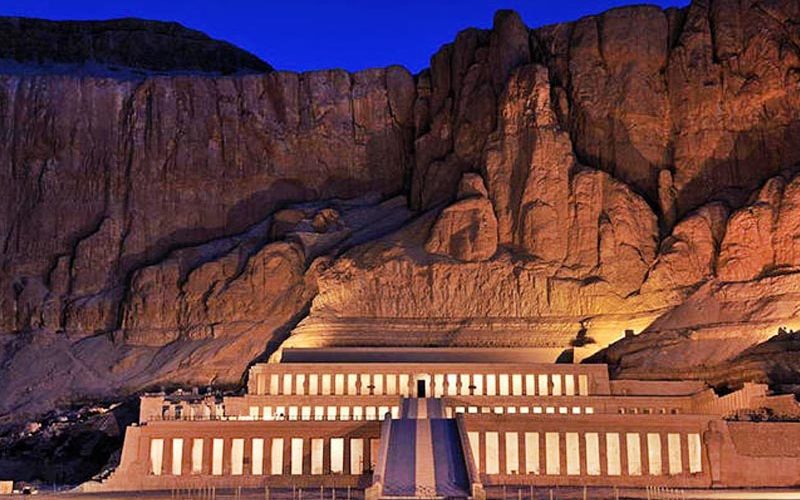
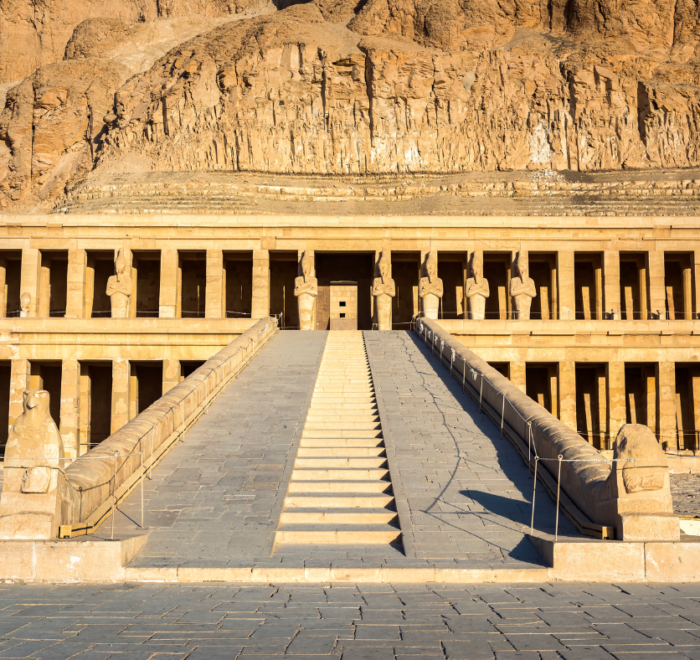
Yes, the West Bank of Luxor offers several notable attractions in addition to the Colossi of Memnon. Visitors can explore the Valley of the Kings, the Valley of the Queens, and various ancient temples such as the Temple of Hatshepsut.
No. The Colossi stand by the roadside and there is no ticket; you can stop for free at any time of day.
The best times to visit the Colossi of Memnon are early morning or late afternoon when the weather is milder, and the site is less crowded. This allows visitors to fully appreciate the majesty of these ancient statues.
Yes. Most West Bank tours stop here for a few minutes, and a licensed guide can explain the statues, the singing legend and the temple excavations behind them.
The Colossi of Memnon are a quick, free and impressive stop that sets the scale for the West Bank. You do not need to plan a separate trip: see them in a few minutes on the way to the tombs and temples.
Book a nearby tour: Luxor West Bank tour: Valley of the Kings, Hatshepsut and the Colossi from $25.
–A Day Trip to Luxor from Cairo: Unveiling the Splendor of Egypt
–Top 15 Must-Do Experiences in Luxor, Egypt
–A Comprehensive Guide to Explore Luxor Attractions
–Unveiling the Best Day Trips from Luxor: A Comprehensive Guide
–Unlocking the Mysteries of Luxor: 7 Compelling Reasons to Visit Luxor
–A Comprehensive Guide on When to Visit Luxor City in Egypt
–Top 10 Things to do in Luxor
–Aswan and Luxor Nile Cruise
Are you seeking an unforgettable and genuine Luxor tours! Your search ends here. Our Luxor Day Tours with Local Guides provide a one-of-a-kind opportunity to immerse yourself in the wonders of this ancient city, with knowledgeable locals as your trusted companions. Get ready for an authentic journey like no other!