Yes – for most visitors a sunrise balloon flight is the best hour you can spend in Luxor, as long as you accept a pre-dawn pickup, book a licensed operator and leave a spare morning in case wind grounds the flight. A shared flight costs roughly $55–120 per person (October 2026), you spend 45–60 minutes in the air over the West Bank, and you are back at your hotel by breakfast.
This guide covers what the morning actually looks like, what you can and can’t see from the basket, real prices, the safety record, and the people we’d tell to skip it.
| What | Details (October 2026) |
|---|---|
| Price, shared basket | About $55–75 booked directly with an operator; about $60–120 through an agency with hotel pickup |
| Price, private basket | About $160–195 per person |
| Pickup | Roughly 4:00–5:30 a.m., depending on the season and where you are staying |
| Time in the air | 45–60 minutes |
| Whole morning | About 3 hours, hotel to hotel |
| Where | Launch field on the West Bank; you fly over the temples and fields below the Theban hills |
| Season | All year; October to April has the coolest, clearest mornings |
Prices are what operators and agencies were publishing in October 2026. They change with the season, so check before you pay.
Sunrise in Luxor falls between about 6:00 and 6:40 a.m. for most of the year, so everything happens in the dark before it:
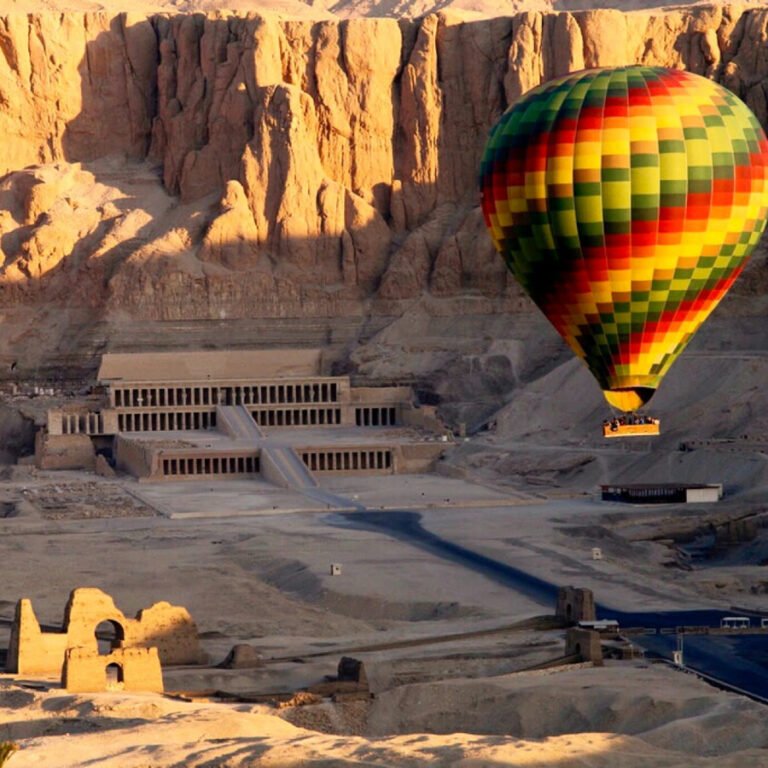
The balloons fly over the West Bank, the old necropolis of Thebes. On a typical route you look down on:
What you won’t see: the tombs. The Valley of the Kings is behind the hills and the tombs are cut deep underground, so from the air it is just a dry valley. Plan a ground visit for the tombs themselves.
Most operators sell two slots:
If the sunrise is the reason you’re going, pay for the first slot. If you mainly want the view and hate early mornings, the second one is a good compromise.
| Option | Typical price per person (Oct 2026) | What changes |
|---|---|---|
| Shared basket, booked direct, no pickup | About $55 | You get yourself to the meeting point |
| Shared basket with hotel pickup | About $60–120 | Pickup, boat crossing, light breakfast; bigger baskets cost less |
| Private basket | About $160–195 | Only your group in the basket; good for families and photographers |
Before you pay, ask three things: how many passengers the basket carries, whether hotel or boat pickup is included, and what happens if the flight is cancelled (a refund or a free move to another morning).
Be careful with the very cheapest offers sold on the street or at the hotel door. A low price usually means the fullest baskets and the least room to move or take photos – and you often can’t check which company is flying you.
Flights are licensed and supervised by Egypt’s Civil Aviation Authority, and they don’t take off when the wind or visibility is poor – whole mornings are cancelled when conditions are bad.
It’s fair to know the history. The worst accident was in February 2013, when a fire on board a balloon killed 19 people. Flights were suspended and rules were tightened afterwards. In 2018 one tourist died when strong wind made a landing go wrong. The incidents reported since then, such as a 2022 collision between two balloons, caused only minor injuries.
What you can do yourself:
Who should skip it or ask first: pregnant women, people with back or knee problems or limited mobility (climbing into the basket and the landing need some agility), and families with very young children – operators set their own minimum age, so ask before booking.
For the wider picture of weather and crowds, see our guide on when to visit Luxor.
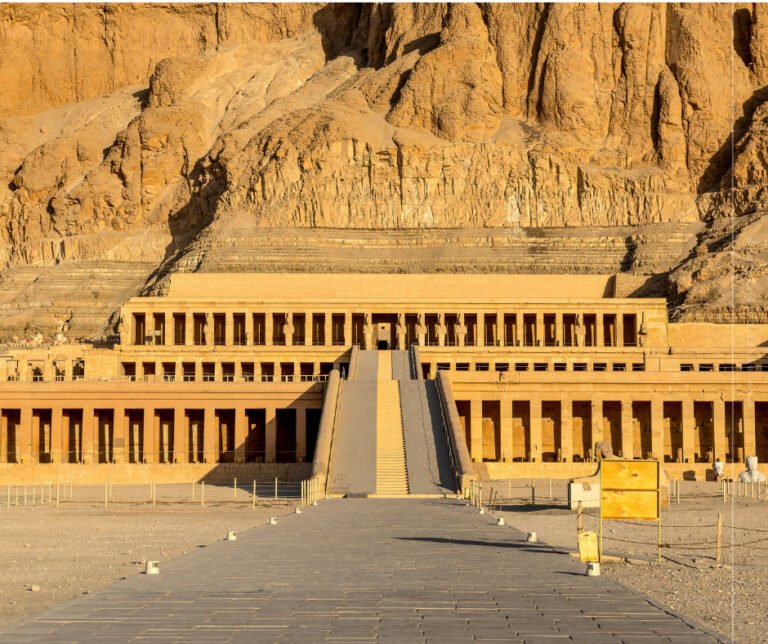
Worth it if you have at least one night in Luxor, you’re fine with an early alarm, and you want to understand the scale of the West Bank – the temples, the cliffs and the green valley in one view.
Not worth it if you’re on a tight budget and have to choose between the balloon and tomb tickets (choose the tombs), you only have a day trip from Cairo, or you have a health condition that makes the landing risky.
Book it with your Luxor day. Book a sunrise balloon ride in Luxor with us – we use licensed operators, pick you up from your hotel, and can join it with our private West Bank tour (from $50 per person, October 2026) so you go straight from the landing field to the Valley of the Kings. Ask us for today’s balloon price.
How much is a hot air balloon ride in Luxor?
About $55–120 per person for a shared basket and $160–195 for a private one (October 2026), depending on the operator and whether pickup is included.
What time does the Luxor balloon pick you up?
Usually between about 4:00 and 5:30 a.m., one to two hours before sunrise. Your operator confirms the exact time the evening before.
How long is the flight?
45–60 minutes in the air. With pickup, the crossing and the wait on the launch field, the whole morning takes about three hours.
Can you see the Valley of the Kings from the balloon?
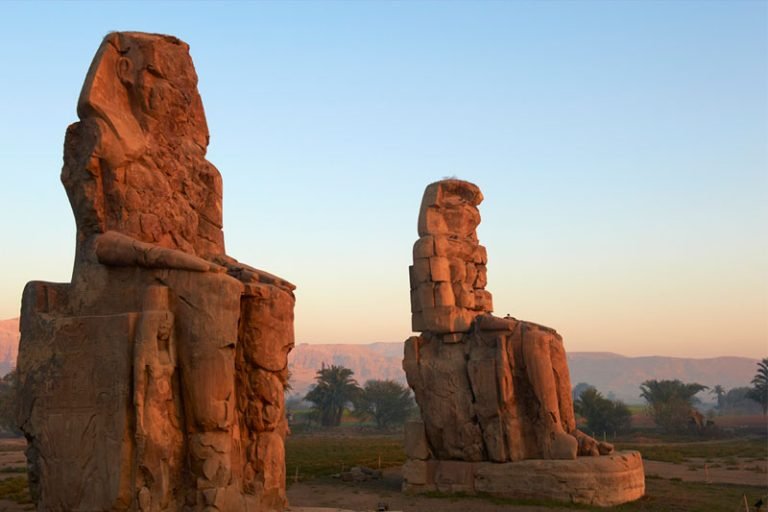
You can see the valley’s area behind the hills, but not the tombs – they are underground. You get a clear view of Hatshepsut’s temple and the Colossi of Memnon.
What happens if the flight is cancelled?
If the Civil Aviation Authority grounds flights for wind or visibility, good operators refund you or move you to the next morning. Ask which before you book.
Is the Luxor balloon better than Cappadocia?
Cappadocia has more balloons and stranger landscapes; Luxor is cheaper and you fly over 3,500-year-old temples. If you’re in Egypt anyway, Luxor is well worth doing.
All rights reserved © Egypttoursinfo.com Republishing this article and/or any of its contents (text, photography, etc.), in whole or in part, is strictly prohibited.
Private and budget day tours on Luxor’s East and West Banks, with a guide and hotel pickup.