Imagine standing in the dark, deep inside a temple carved into a mountain more than 3,000 years ago. Thousands of people around you fall silent. Then, right on time, a narrow beam of golden sunlight slips through the entrance, travels down the long hall, and lights up the faces of the statues seated in the innermost sanctuary.
This is the Abu Simbel Sun Festival, one of the most extraordinary events in Egypt. It happens only twice a year, and the ancient Egyptians planned it with an accuracy that still amazes engineers today.
The short answer: the sun alignment happens every year on February 22 and October 22, shortly after sunrise (around 6:00 AM). It’s absolutely worth it if you love history and don’t mind a middle-of-the-night start and big crowds. If you’d rather avoid both, Abu Simbel is still spectacular on any other day.
Below you’ll find the 2027 dates, the story behind the alignment, how to get there from Aswan, what the day really looks like, an FAQ, and our best tips. Let’s dive in!
| Where | Great Temple of Ramesses II, Abu Simbel, about 280 km south of Aswan |
| When | February 22 & October 22 every year, shortly after sunrise (around 6:00 AM) |
| How long | The sunlight stays on the statues for about 20 minutes |
| Ticket (2026) | Around EGP 822 for foreign adults on regular days; festival days cost more (reported around EGP 1,200–1,270). Check before you go. |
| Getting there | 3–3.5 hours by road from Aswan, or about 45 minutes by flight |
| Our tour | Private Day Tour to Abu Simbel from Aswan, from $100, entry fees included |

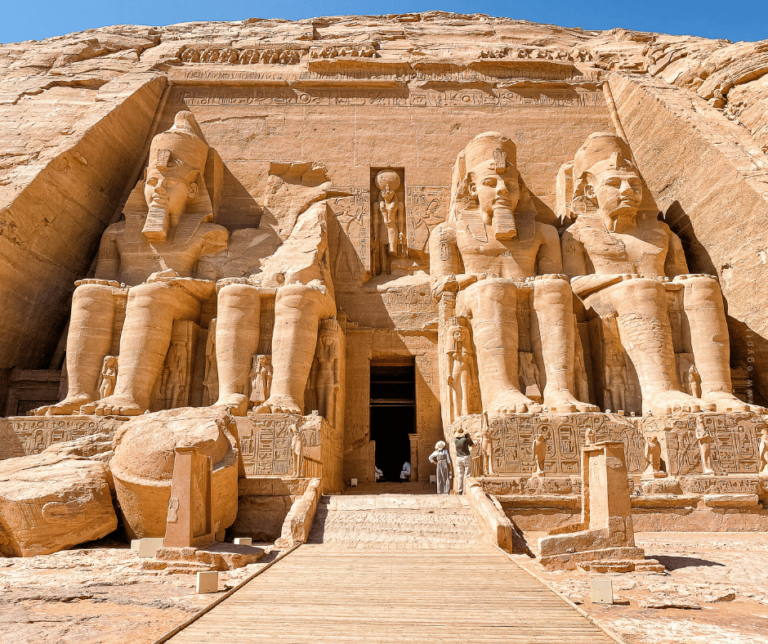
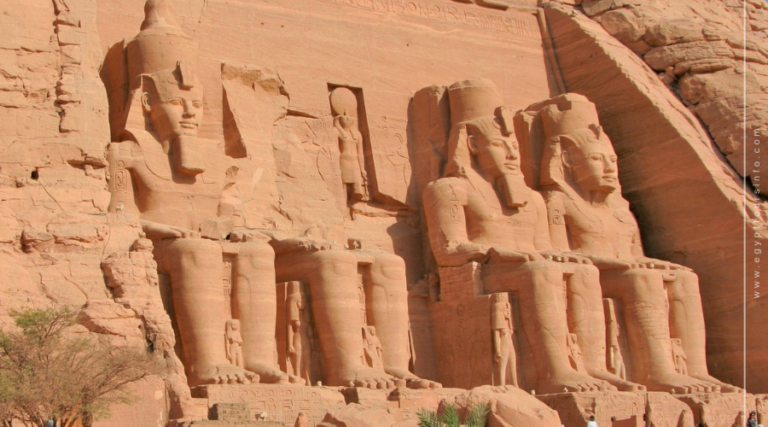
The Great Temple of Abu Simbel was built by Pharaoh Ramesses II in the 13th century BC, close to Egypt’s southern border with Sudan. Its main hall runs straight back into the mountain, ending in a small sanctuary where four seated statues sit side by side.
Twice a year, the rising sun lines up perfectly with the temple’s entrance. For around 20 minutes, its rays travel more than 50 meters through the temple and light up three of those four statues:
The fourth statue, Ptah, a god connected with the underworld, stays in the shadow. Most experts believe this was deliberate, and it’s one of the details that makes the moment so moving.
The sun alignment happens every year on the same two mornings. In 2027, that’s Monday, February 22 and Friday, October 22. The light usually enters the sanctuary shortly after sunrise, at around 6:00 AM local time.
According to popular tradition, these dates mark Ramesses II’s birthday and his coronation day. That story is widely repeated, but historians don’t have firm evidence for it. Many scholars think the dates were linked to the agricultural seasons instead.
| February 22 | October 22 | |
|---|---|---|
| Season | Peak winter season | Start of the high season |
| Weather | Cold desert night, pleasant morning | Mild night, warm by mid-morning |
| Crowds | Usually the busiest of the two | Busy, but often a little calmer |
| Combine with | A winter Nile cruise between Luxor and Aswan | Autumn sightseeing before the winter peak |
A Quick Tip: Hotels in Aswan fill up for both dates. If the festival is the reason for your trip, book your hotel and tour first, then plan the rest of your itinerary around it.

What makes the festival even more remarkable is that the temple you see today is not in its original location.
In the 1960s, the construction of the Aswan High Dam was about to flood the area under the waters of Lake Nasser. In a huge international rescue led by UNESCO, engineers cut the entire temple into massive blocks and rebuilt it on higher ground, about 65 meters above and 200 meters back from its original spot.
The engineers worked hard to keep the alignment, and they nearly got it perfect. The sun now reaches the sanctuary about one day later than it did in ancient times. Think about that for a moment: modern engineers with cranes and computers came within a day of what the ancient Egyptians achieved with stone, ropes and an astonishing knowledge of the sky.
Abu Simbel is a small town about 280 km south of Aswan, so almost every visitor travels from Aswan. You have two main options:
| By road | By flight | |
|---|---|---|
| Travel time | 3–3.5 hours each way | About 45 minutes |
| Festival-day timing | Leaves Aswan around 1:00–2:00 AM and arrives before sunrise | Schedules don’t always match the sunrise, so check carefully |
| Best for | Festival mornings and travelers on a budget | Regular days, when you want to save time |
| Our tour | Private day tour from $100 | Flight day tour from $250 |
Local Insider Tip: Driving south from Aswan, the sun rises on your left. Sit on the left side of the car and you’ll watch the sky turn pink over the open desert on the way.
Book This Experience: Our Private Day Tour to Abu Simbel Temples from Aswan includes hotel pickup, a private air-conditioned vehicle, a local guide and your entry fees, from $100 per person.

Here’s what a typical festival morning looks like. Exact times change slightly every year, so treat this as a guide:
| Time | What happens |
|---|---|
| 1:00–2:00 AM | Pickup from your Aswan hotel or Nile cruise. Bring a snack and try to sleep on the way. |
| 4:30–5:30 AM | Arrival in the dark and queueing at the temple gate with thousands of Egyptian and international visitors. |
| Around 6:00 AM | Sunrise. The beam moves down the hall and lights up the statues in the sanctuary for about 20 minutes. |
| After the alignment | Nubian music, drumming and dancing outside the temples, and time to visit the Temple of Hathor. |
| Late morning | Drive back to Aswan, arriving in the early afternoon. |
Only a limited number of people can stand inside the hall at once, so you may only have a short moment in front of the sanctuary. Even with the crowd, it’s a quiet and emotional moment for most people.
After the alignment, take time to visit the smaller Temple of Hathor, built by Ramesses II for his beloved wife, Queen Nefertari, right next to the Great Temple.
Local Insider Tip: Many Egyptian sites have moved to card-only ticket payments, so carry a bank card that works abroad. If you book a tour that includes entry fees, like ours, your guide handles the tickets for you.
It takes place on February 22 and October 22, 2027. The sunlight reaches the inner sanctuary shortly after sunrise, at around 6:00 AM local time, and stays on the statues for about 20 minutes.
Yes, but it’s hard to organize alone. You need transport that leaves Aswan in the middle of the night, a festival-day ticket, and good timing at the gate. A tour handles all of this, which is why most visitors book one.
In 2026, the regular entry ticket is around EGP 822 for foreign adults, and festival days cost more. Tours from Aswan start from about $100 per person by road with our private tour, entry fees included.
For most travelers, yes. It’s a rare chance to see an ancient alignment working exactly as planned, with a festive Nubian celebration outside. If you dislike crowds or very early starts, visit Abu Simbel on a normal day instead.
Older children usually love it, but the night departure, long drive and queueing are tiring for young kids. If you travel with small children, consider staying overnight in Abu Simbel or visiting on a quieter day.
Wear layers: a warm jacket for the cold desert night and a light shirt for later in the morning. Comfortable shoes, a hat and sunglasses are a good idea, and modest clothing is always appreciated at temples.
So, is the Abu Simbel Sun Festival worth it?
Yes, if you love history and don’t mind crowds and an early start.
Watching sunlight reach into the heart of a 3,000-year-old temple, exactly as its builders planned, is something you will remember for the rest of your life. Add the music, the dancing and the energy of thousands of people sharing the same moment, and it becomes far more than a sightseeing stop.
It’s probably not for you if you need a lot of personal space, travel with very young children, or simply don’t enjoy middle-of-the-night starts. In that case, visit Abu Simbel on any other day: it’s still one of the most impressive sites in Egypt, and an absolute must when you visit Aswan.
Seeing Abu Simbel takes careful planning: very early departures, long desert drives and, on festival days, huge crowds. Let Egypt Tours Info handle the logistics with experienced guides, comfortable transport and well-timed itineraries, so you can simply enjoy the experience.
Ready to Witness the Sun Over Abu Simbel?
👉 Private Day Tour to Abu Simbel Temples from Aswan: from $100, entry fees included
👉 Abu Simbel from Aswan by Flight Day Tour: from $250
👉 8 Days 7 Nights Cairo, Luxor and Aswan including Abu Simbel: from $1,250
All rights reserved © Egypttoursinfo.com Republishing this article and/or any of its contents (text, photography, etc.), in whole or in part, is strictly prohibited.
Join our private day tour from Aswan, with hotel pickup, a local guide and your entry fees included.
Hand-picked day trips and tours from Aswan, with hotel pickup and local guides.